


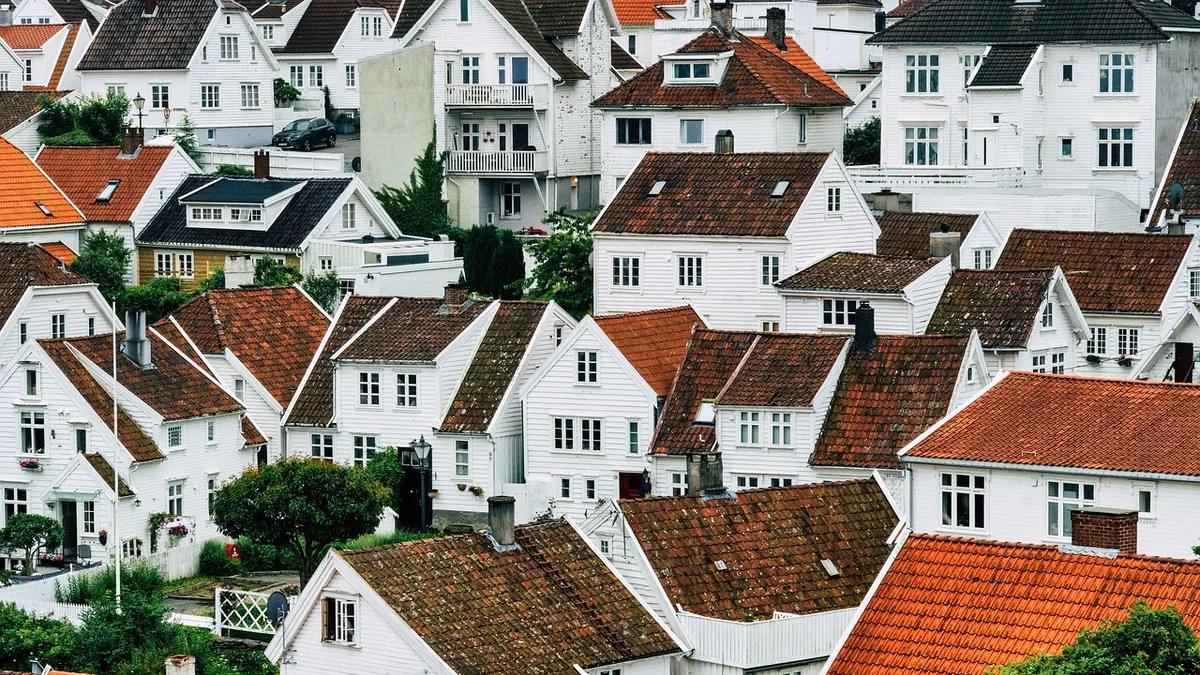
Districts II and XII sit in the forested western hills of Budapest, offering larger homes, cleaner air and strong international-school access at a premium over Pest-side prices. District II (Budakeszi út corridor, Pasarét, Törökvész) suits buyers who want city connectivity; District XII (Hegyvidék, Svábhegy, Normafa) trades a slightly longer commute for a quieter, greener setting. Expect apartment prices of roughly 1.2–2.2 million HUF per square metre and detached house prices well above that range.
Why buyers choose the Buda Hills over central Pest
The Buda Hills are not a marketing phrase — they are a genuine topographical feature, a chain of forested ridges running from the Danube bend southward through Districts II and XII. Families relocating from Western Europe or North America often describe the area as the part of Budapest that most resembles a leafy suburb without actually leaving the city boundary.
The practical reasons are straightforward. Air quality readings in the hills consistently sit below the city average because traffic volumes are lower and tree cover is high. The János-hegy peak at 527 metres gives Districts II and XII a noticeably cooler microclimate in summer, which matters more each year. Green space — Normafa, the Budakeszi Wildlife Park, the Hármashatár-hegy nature reserve — is walkable from most residential streets, not a weekend drive away.
The buyer profile reflects this. The Buda Hills attract Hungarian professionals moving out of smaller central Pest apartments as their families grow, returning diaspora who want proximity to international schools, and EU-based buyers looking for a primary or secondary residence with outdoor access. If you are weighing up why to invest in Budapest at all, the hills add a quality-of-life argument that pure yield calculations do not capture.
District II at a glance: Budakeszi út, Pasarét and Törökvész
District II (Második kerület) is the larger of the two districts and the more urbanised. Its southern edge — Margit körút, Mechwart tér, the Mammut shopping centre — feels like inner Buda. Moving north and west along Budakeszi út or Törökvész utca, the density drops quickly and the streets fill with 1930s villas, post-war family houses and a growing stock of gated new-build developments.
Pasarét is the sub-neighbourhood that consistently attracts the most foreign-buyer enquiries. It sits between the Rózsadomb ridge and the Buda Hills proper, close to the French Institute and several international schools. Streets like Pasaréti út and Apostol utca have a calm, almost village-like character despite being 15 minutes by tram from the city centre. Properties here rarely stay listed for long.
Törökvész, slightly further north, offers more land per forint. Plots here are larger, and it is common to find 400–600 sqm gardens attached to detached houses. The trade-off is that public transport connections thin out, making a car more or less essential for daily life. The Budakeszi út corridor itself is well served by bus routes 22 and 222, which connect directly to Széll Kálmán tér.
District XII at a glance: Hegyvidék, Svábhegy and Normafa
District XII calls itself Hegyvidék — literally “highland” — and the name is accurate. The district climbs from Déli railway station at around 100 metres above sea level to the Normafa plateau at roughly 450 metres. This gradient shapes everything: architecture, plot sizes, road widths and the pace of daily life.
The lower part of District XII, around Alkotás utca and Böszörményi út, is dense and well-connected — tram 59 and the Fogaskerekű (cog railway) both run here. The mid-hill zone around Svábhegy and the Csillebérc area is where you find the classic Buda Hills property: a 200–350 sqm house on a terraced plot with a south-facing terrace and a view across the forest canopy. These properties rarely appear on the open market; many change hands through personal networks or specialist agencies.
Normafa itself is primarily a recreational area — the ski slope, the hiking trails, the Normafa Bistro — but the streets immediately below it (Eötvös út, Béla király út) contain some of the most sought-after addresses in the entire city. A renovated 1920s villa on Béla király út is a different product from a Pest-side apartment in almost every respect: the buyer is purchasing a lifestyle as much as a property.
Price comparison: apartments, family homes and new builds
Prices in the Buda Hills carry a consistent premium over the Budapest average, reflecting both the land scarcity and the buyer profile. The table below gives indicative ranges based on current market conditions in mid-2026. These are broad bands — condition, views, plot size and proximity to transport all move individual properties significantly within or outside these ranges.
New-build supply in both districts is constrained by planning rules that limit building heights and protect the hillside character. This structural scarcity is one reason why resale values in the Buda Hills have historically held up better during market downturns than the Budapest average. Browse current Budapest property listings to see what is available across both districts right now.
Land scarcity in Districts II and XII is structural, not cyclical. Planning rules cap building heights and protect forest edges, which means new supply will remain limited regardless of demand.
Schools, healthcare and everyday amenities
The Buda Hills have a disproportionately high concentration of international and bilingual schools relative to their population size. The British International School Budapest (BISB) operates in District II. The American International School of Budapest (AISB) is located just outside the city boundary in Nagykovácsi, a short drive from the Budakeszi út corridor. Several Hungarian-language schools in District XII — notably Városmajori Gimnázium — have strong academic reputations and are popular with Hungarian families who prioritise state education.
Healthcare access is good. The Telki Hospital (a private facility) is a short drive from District II. The Kútvölgyi Clinical Centre, a large state hospital, sits on the District XII–District I boundary. Several private GP practices and specialist clinics operate along Alkotás utca and Budakeszi út, catering to the expat community.
Day-to-day shopping is less convenient than in central Pest, and this is a genuine lifestyle consideration rather than a minor inconvenience. The Budagyöngye shopping centre on Szilágyi Erzsébet fasor is the main retail hub for District II. District XII residents tend to use the Alkotás utca strip or drive to the Allee mall near Kelenföld. A weekly market runs at Fény utca (technically District II but used by both districts) and is well regarded for fresh produce.
Commute times and public transport
Connectivity is the most common concern buyers raise about the Buda Hills, and it deserves an honest answer. The hills are not on the metro network. Getting to the city centre relies on trams, buses and the cog railway — all of which work well but are slower than a metro line.
- Széll Kálmán tér (the main Buda transport hub, Metro 2) is reachable from Pasarét in about 12–15 minutes by tram 56 or 56A, and from lower District XII in about 10 minutes by tram 59 or 61.
- Fogaskerekű (cog railway, line 60) runs from Városmajor in District XII up to Széchenyi-hegy, useful for residents in the mid-hill zone.
- Bus 22 and 222 serve the Budakeszi út corridor in District II, terminating at Széll Kálmán tér. Journey time from the Budakeszi Wildlife Park stop is around 25–30 minutes in normal traffic.
- Driving to the city centre takes 15–25 minutes outside peak hours; during morning rush hour on Budakeszi út or Alkotás utca, add 15–20 minutes.
For buyers who work remotely or have flexible hours, the commute question matters less. For those commuting daily to Pest-side offices, District II’s tram connections make it the more practical choice over the upper reaches of District XII.
Rental demand and resale outlook
The Buda Hills are not a short-term rental market. Airbnb-style yields that work in District V or VII do not translate here — the guest profile and location do not suit nightly lets. The rental market in Districts II and XII is almost entirely long-term, driven by expat families on corporate or diplomatic postings, senior Hungarian professionals and international-school families who rent for one to three years before deciding whether to buy.
This tenant profile is stable and tends to pay on time, but the pool is smaller than in central Pest. A well-maintained three-bedroom apartment in Pasarét or Hegyvidék will find a tenant, but it may take four to eight weeks rather than four to eight days. Monthly rents for a 100 sqm apartment in good condition range from roughly 400,000 to 650,000 HUF depending on finish, parking and proximity to schools. Detached houses command 700,000 HUF and above.
Resale demand is consistently strong for well-located properties in both districts, particularly those within walking distance of international schools or with unobstructed forest views. Properties that sit in awkward locations — steep access roads, no parking, far from any bus route — can take longer to sell and may require price adjustments. If you are buying partly as an investment, our property management service can help you assess realistic yield expectations before you commit.
What to watch out for before you buy
Hillside properties come with a specific set of due-diligence requirements that flat-land apartments do not. Some of these are practical; others are legal. Skipping any of them is a common source of regret among buyers who moved quickly.
- Slope stability and drainage: Properties on steeper gradients in District XII in particular can have drainage or retaining-wall issues that are expensive to fix. Commission a structural survey, not just a valuation.
- Road access and winter conditions: Some upper-hill streets in District XII are steep enough to be difficult in icy conditions. Ask the seller or neighbours about winter access before signing.
- Building permits and extensions: Many Buda Hills villas have been extended informally over decades. Check that all built structures appear on the official building registry (épületnyilvántartás) and match the title deed (tulajdoni lap). Unpermitted extensions can complicate resale and mortgage applications.
- Protected building status: Some older villas in both districts carry heritage protection (műemlékvédelem), which restricts what you can change on the exterior and sometimes the interior. This is not necessarily a dealbreaker, but it must be factored into renovation plans.
- Forest-edge plots: Properties bordering the Budai-hegység protected landscape area may face restrictions on tree removal and outbuilding construction. Verify with the relevant district authority.
Working with an agency that knows these districts well reduces the risk of buying a property with hidden complications. You can see current properties for sale in Budapest including Buda Hills listings, and our team can flag any of the above issues during the viewing and due-diligence process. For buyers new to Hungarian property law, our Budapest buying guide articles cover the legal steps in plain English.
Frequently asked questions
- Is District II or District XII better for families with young children?
- Both districts work well for families, but District II has a slight edge for parents who need easy access to international schools and prefer shorter commutes. Pasarét and the Budakeszi út corridor put the British International School and the French Institute within a short drive, and tram connections to central Buda are reliable. District XII suits families who prioritise the quietest, greenest environment and are comfortable with a car-dependent lifestyle.
- Can foreigners buy property in Districts II and XII without restrictions?
- EU citizens can purchase residential property in Hungary on the same terms as Hungarian nationals. Non-EU citizens can also buy but must obtain a permit from the regional government office (járási hivatal). Agricultural land has separate, stricter rules that do not typically apply to residential plots in these districts. Always verify your specific situation with a qualified Hungarian property lawyer before proceeding.
- What is the typical price per square metre for an apartment in the Buda Hills in 2026?
- For existing apartment stock in Districts II and XII, prices broadly range from around 1.1 million to 1.9 million HUF per square metre, depending on condition, floor, views and proximity to transport. New-build apartments in gated developments can reach 2.2–2.5 million HUF per square metre. These are indicative figures — individual properties vary considerably, and the market moves. A current listing search will give the most accurate picture.
- Are there good rental yields in the Buda Hills?
- Gross rental yields in Districts II and XII are generally lower than in the tourist-heavy central districts, typically in the 3–5% range for long-term lets. The tenant base is stable — expat families, diplomatic staff, senior professionals — but the pool is smaller. Buyers who prioritise yield over lifestyle should also consider central Pest districts. Those who want capital preservation and a quality home will find the Buda Hills more compelling.
- How long does it take to sell a Buda Hills property?
- Well-priced, well-located properties in Pasarét, Hegyvidék and the Svábhegy area typically sell within two to four months. Properties with access issues, unpermitted extensions or pricing above market comparables can take significantly longer. The buyer pool for premium detached houses is smaller than for central apartments, so realistic pricing from the outset matters more here than in higher-volume markets.
- Is the Fogaskerekű (cog railway) a practical daily commute option?
- The Fogaskerekű (BKK line 60) runs from Városmajor in District XII up to Széchenyi-hegy and is a genuine commute option for residents in the mid-hill zone of District XII. It connects at Városmajor to trams 59 and 61, which reach Széll Kálmán tér (Metro 2) in about 10 minutes. The full journey from Széchenyi-hegy to central Pest takes roughly 35–45 minutes. It is scenic and reliable, but slower than a metro connection.
- Are there new-build apartments available in Districts II and XII?
- New-build supply is limited by planning rules that cap building heights and protect the hillside character of both districts. Small to mid-size gated developments do appear, particularly along the Budakeszi út corridor in District II and in the lower parts of District XII near Alkotás utca. These sell quickly and often off-plan. Checking current listings regularly or registering with a local agency is the most reliable way to hear about new projects early.