


District VII Erzsébetváros Budapest: Good to Buy?
District VII, known as Erzsébetváros, is Budapest's most central and most debated district for buyers. It sits inside the Grand Boulevard next to the Jewish Quarter, packed with 19th-century apartment buildings, ruin bars and strong long-term rental demand, but short-term letting has been restricted for years and parts of the district are genuinely loud at night. It suits buy-to-let investors targeting long-term tenants and buyers who want walkable, historic Budapest over quiet Budapest. It does not suit anyone chasing quiet family living or unrestricted Airbnb income without checking the building first.
Where District VII Is and Its Boundaries
Erzsébetváros is one of the smallest districts in Budapest by area but one of the densest in population and building stock. It sits on the Pest side, wedged between the inner core and the Nagykörút, the Grand Boulevard that forms most of its outer edge. Károly körút and Erzsébet körút mark the boundary with District V (Belváros) and District VI (Terézváros). Rákóczi út and the area around Astoria and Blaha Lujza tér separate it from District VIII (Józsefváros). It is a walk of ten to fifteen minutes from the Danube and from Andrássy út in almost any direction.
The district is small enough that "living in District VII" almost always means living within a few hundred metres of the Jewish Quarter, the Dohány Street Synagogue and the ruin bar cluster around Kazinczy utca. There is no quiet, leafy outer edge the way there is in some larger districts. What changes street to street is not the neighbourhood, it is the noise level and the building quality.
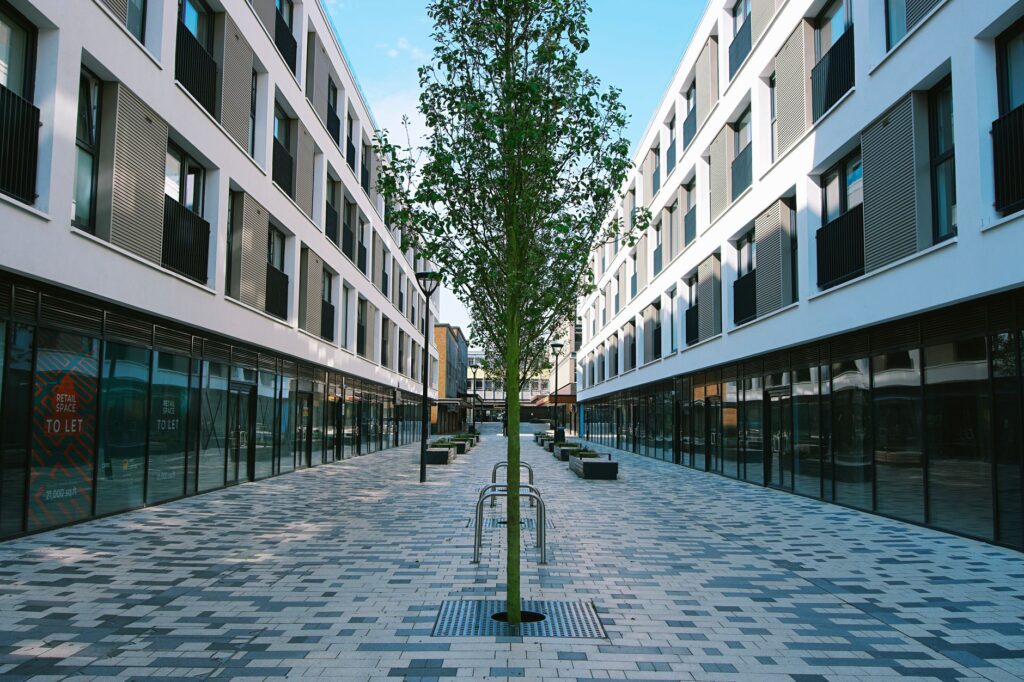
The Housing Stock: Building Ages, Sizes and Condition
Almost all the residential stock in Erzsébetváros dates from the late 1800s to the early 1900s, the same building boom that gave Budapest its eclectic and neoclassical facades. Expect thick masonry walls, high ceilings, ornate stairwells and internal courtyards that the flats are built around. Some buildings have working lifts, many still do not, particularly on the upper floors of unrenovated blocks. Original apartments were large, often 90 to 150 square metres, and a lot of the district's current stock is the result of those apartments being split into smaller units, so you will find a wide range: 25 to 40 square metre studio conversions sit in the same buildings as untouched 100 square metre original layouts.
Condition varies enormously within a single building. A renovated street-facing flat and a tired courtyard-facing flat one floor apart can be in completely different states. New-build stock is almost nonexistent here because most of the district falls under heritage protection, so what you are buying is nearly always pre-war stock, either renovated to a good standard, partially renovated, or original and in need of full modernisation. Always ask when the building's common areas, roof, facade and utilities were last renovated, not just the flat itself.
Erzsébetváros Property Prices per Square Metre in 2026
Prices in District VII sit in the upper-middle band of Budapest's inner districts, below District V and generally below District VI, and above District VIII. The figures below are indicative only, gathered as a general guide to where the district sits relative to its neighbours. Always check current listings or ask us for a live comparison before using any number to negotiate.
| District | Indicative price per sqm (EUR) | Position relative to Budapest average |
|---|---|---|
| Budapest citywide average | approx. 2,600 to 3,400 | baseline |
| District V (Belváros) | approx. 3,800 to 5,500 | well above average |
| District VI (Terézváros) | approx. 3,200 to 4,500 | above average |
| District VII (Erzsébetváros) | approx. 2,800 to 4,000 | above average |
| District VIII (inner Józsefváros) | approx. 2,200 to 3,200 | around or below average |
Renovated flats near Klauzál tér or on the quieter Rumbach Sebestyén and Wesselényi stretch typically sit at the top of that range. Original, unrenovated flats in courtyard positions can trade well below it, which is exactly where value-add buyers look. For a wider view of how District VII compares with the rest of the city, our guide to investing in Budapest covers pricing trends across all districts.
Who Buys and Rents in District VII (and Rental Demand)
The tenant and buyer profile here is young, mobile and rarely local-family. Long-term tenants are mostly young professionals, expats working in Budapest and students at the universities within walking distance. Buyers tend to be either owner-occupiers who want to live in the middle of everything without a car, or investors targeting long-term rental yield rather than the short-term visitor market that made this district famous a decade ago.
Families with children buy here less often than in outer districts, mainly because green space is limited and schooling options are thinner than in District II, XI or XII. Rental demand for long-term tenants is consistently strong because of the location alone: walk to the office districts, walk to Andrássy, walk to the river. That demand held up even as short-term letting rules tightened, because the district converted a meaningful share of its former Airbnb stock into standard long-term rentals.
Transport and Amenities in Erzsébetváros
Transport is one of the district's genuine strengths. Metro line M2 skirts the district at Astoria and Blaha Lujza tér, both major interchange points with tram lines. Metro line M1, the oldest metro line on the continent, runs just along the District VI border with stops like Oktogon within easy walking distance of most of Erzsébetváros. Trams 4 and 6 run the full length of the Nagykörút on the district's edge, connecting straight to Buda in one direction and further into Pest in the other. From almost anywhere in the district you can be at a metro or tram stop within a five to eight minute walk.
Amenities are dense and mostly aimed at eating, drinking and culture rather than daily-life shopping. The Great Synagogue, Gozsdu Courtyard, Klauzál tér market and square, and the ruin bar cluster anchor the district's identity. What it does not have much of is supermarkets with parking, playgrounds, or quiet green space, so weigh that against the walkability if you plan to live here rather than rent it out.
Pros, Cons and Risks of Buying in District VII
The case for buying rests on location and liquidity. Flats here are easy to rent long-term and easy to resell because the location sells itself. Architecture is genuinely strong and heritage protection means the district's character is not going to be replaced by new towers. Flood risk is low, since Erzsébetváros sits back from the Danube rather than directly on it, unlike parts of District XIII or the Buda riverside.
The case against is mostly about noise and rental regulation. Streets in and around the ruin bar core, particularly Kazinczy utca and the Dob utca stretch near it, are loud well into the night, most of the year. Heating in older buildings is typically individual gas, either a wall-mounted convector or combi boiler per flat, occasionally a shared building gas system, and either way it is worth checking the common charge and the age of the system before buying. Short-term rental rules are the biggest practical risk: District VII was among the first parts of Budapest to restrict Airbnb-style letting in specific buildings and zones, and city-level rules on short-term rentals have tightened further since. Regulations here have changed more than once and can vary by building, so never assume short-term letting income based on how the district used to work.
The most expensive mistake buyers make in District VII: buying a flat with an expected Airbnb yield in mind, without confirming the current legal status of short-term letting for that specific address. Rules have changed multiple times at both district and city level, and what was allowed a few years ago is often not allowed now. Get written confirmation of the current rules for the exact building before you factor short-term income into your numbers, not after you sign.
Best Streets and Pockets (and Ones to Avoid)
Not all of Erzsébetváros is equally loud. The pattern is fairly predictable: the closer you get to Kazinczy utca, Dob utca and the ruin bar core, the louder and more tourist-heavy it gets. Move toward Klauzál tér, Rumbach Sebestyén utca or the streets nearer the District VI border and it calms down noticeably while staying just as central.
| Area | Character | Best for |
|---|---|---|
| Klauzál tér and surrounding streets | Leafy square, quieter residential feel | Owner-occupiers, long-term rental |
| Rumbach Sebestyén / Wesselényi | Central but calmer, near the synagogue | Buyers wanting quiet without leaving the core |
| Kazinczy utca and immediate side streets | Ruin bar core, loud most nights | Avoid for full-time living; strong tourist rental history but now restricted |
| Dob utca (lower stretch) | Busy, bar-adjacent, mixed condition | Value-add investors comfortable with renovation and noise |
| Directly on Erzsébet körút | Traffic and tram noise, but strong transport links | Investors prioritising transport over quiet |
Verdict: Is District VII a Good Place to Buy?
District VII is a good buy for a long-term rental investor who wants a central, liquid asset and is comfortable renting to young professionals and expats rather than tourists. It is also a reasonable buy for someone who wants to live in the middle of Budapest and does not mind noise as part of the deal. It is a poor fit for anyone building their numbers around short-term rental income without checking building-specific rules first, and a poor fit for buyers who want quiet, green, family-first living, where districts like II, XI or XII will suit better.
If you are comparing Erzsébetváros against other central districts, our Budapest property guides cover each district on the same basis, and our apartment sales listings let you see current stock and pricing in District VII directly rather than relying on averages.
Frequently Asked Questions
Is District VII Budapest good for investment?
District VII is a solid choice for long-term rental investment because of its central location and consistent demand from young professionals and expats. It is a weaker choice for short-term rental investment specifically, since Erzsébetváros was one of the first Budapest districts to restrict Airbnb-style letting, and rules have tightened further since. Confirm current short-term rental status building by building before assuming that income stream.
Can you still do Airbnb in District VII?
Short-term letting in Erzsébetváros has been restricted for several years, initially through district-level rules affecting specific buildings and zones, and further tightened by later city-level regulation on short-term rentals in Budapest. Whether a specific apartment can legally be let short-term depends on the building and current rules, which have changed more than once. Verify this in writing before buying with that income in mind.
What is the average price per square metre in Erzsébetváros?
Indicative prices in District VII currently sit around 2,800 to 4,000 EUR per square metre, above the Budapest citywide average and below District V and District VI, with renovated flats near Klauzál tér toward the top of that range and unrenovated courtyard flats lower. These figures are approximate and should be checked against current listings before making an offer.
Is District VII noisy?
Parts of District VII, particularly Kazinczy utca and the streets immediately around the ruin bar core, are loud most nights of the year due to bars and nightlife. Other parts of the same district, such as around Klauzál tér and Rumbach Sebestyén utca, are noticeably quieter while still being central. Noise level in Erzsébetváros depends heavily on the specific street, not just the district.
Is District VII Budapest safe?
District VII is generally as safe as other central Budapest districts for day-to-day living, with the usual city-centre precautions around late-night nightlife areas and tourist-heavy streets. It carries no unusual crime risk compared with neighbouring central districts, though the density of bars in the Kazinczy utca area means more late-night street activity than in quieter residential districts.
What is the difference between District VII and District VI?
District VI (Terézváros) centres on Andrássy út, is generally more polished and slightly more expensive, and skews toward a calmer, more upscale residential feel. District VII (Erzsébetváros) is denser, cheaper on average, and built around the Jewish Quarter and ruin bar scene, so it trades some polish and quiet for lower entry prices and a livelier, younger rental market.
Are there lifts in District VII apartment buildings?
Many buildings in Erzsébetváros do have lifts, but a significant number of the district's original 19th-century buildings still do not, particularly where upper floors were never retrofitted. Whether a specific building has a working lift needs to be confirmed apartment by apartment; do not assume it based on the building's age or facade alone.
What heating do apartments in District VII have?
Most apartments in District VII use individual gas heating, either a wall-mounted convector or a combi boiler serving that flat alone, rather than district heating. A smaller number of buildings run a shared gas system for the whole block. Always check the heating type, its age and the flat's typical monthly utility cost before buying, since this varies building to building.
For help comparing District VII against other central districts, or to see current listings that match your budget and rental goals, get in touch through our contact page, or browse all current properties we have available across Budapest.