


District XX Budapest (Pesterzsébet): Is It Good to Buy?
District XX, known as Pesterzsébet, is one of Budapest's more affordable outer districts, sitting south of Ferencváros on the Pest side. Expect lower prices per square metre than the Budapest average, a mix of early 1900s family houses and 1960s to 1980s panel blocks, and rental demand driven by local workers and families rather than tourists or students. It suits buyers chasing yield and a lower entry price, not those wanting short-term rental income or a city-centre lifestyle. Check flood protection status and current short-term rental rules before buying.
- Where is Pesterzsébet and what are its boundaries?
- Housing stock: building ages, sizes and condition
- Property prices in District XX per square metre
- Rents and rental yields
- Transport: HÉV, tram and bus
- Amenities and daily life
- Pros, cons and risks
- Best pockets to buy and areas to avoid
- Verdict: is District XX a good place to buy?
- FAQ
Where is Pesterzsébet and what are its boundaries?
District XX sits on the southern edge of Pest, wedged between District IX (Ferencváros) to the north, District XVIII (Pestszentlőrinc-Pestszentimre) to the east, and District XXIII (Soroksár) to the south. To the west, across the Soroksári branch of the Danube, is District XXI (Csepel). Pesterzsébet was its own town until 1950, when a wave of annexations folded Csepel, Soroksár, Pesterzsébet and several other surrounding settlements into what became Greater Budapest. That history still shows: the district has a village-like core with a main square and market street, not the grid of an inner district built as part of the capital from the start.
It takes its name from Queen Elisabeth, Erzsébet in Hungarian, and the town layout around the old centre still reads as a separate place that happened to get absorbed by a bigger city, rather than a neighbourhood planned as part of Budapest proper.
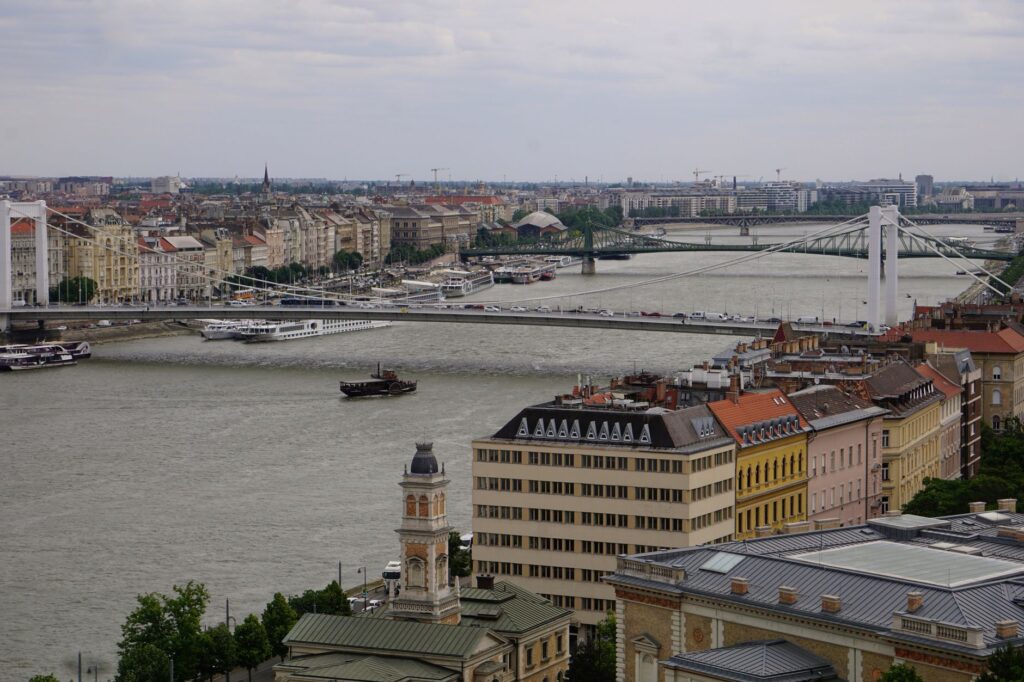
Housing stock: building ages, sizes and condition
The housing stock in District XX is split roughly into three bands, and this matters more here than in most districts because the gap in price and liquidity between them is wide.
- Pre-war family houses and small garden city plots, mostly one or two storeys, dating from the early 1900s through the 1930s. Many have been extended or rebuilt piecemeal over decades. Condition varies enormously from one plot to the next, so a structural check before purchase is not optional here.
- Socialist-era panel and brick apartment blocks from the 1960s to 1980s, typically four to ten storeys. Flats run from roughly 35 sqm studios to 55 to 65 sqm two-bedroom units. Lifts are present in the taller blocks but not universal in the lower four-storey ones, so check this specifically if mobility matters to you or a future tenant.
- A small number of newer developments, mostly low-rise, built in the last fifteen to twenty years near green space or close to HÉV stops. These are the exception rather than the rule in this district and command a real price premium over the older stock.
Courtyards exist in the older panel blocks but are functional rather than attractive, mostly parking and bike storage rather than communal garden space. If you want the Budapest courtyard look you associate with inner-district buildings, this is not that district.
Property prices in District XX per square metre
District XX is consistently among the cheaper districts in Budapest on a per square metre basis, usually grouped with District XXI and the outer parts of District XVIII. The numbers below are indicative only, pulled together from the general shape of the market rather than a specific dataset, and you should check them against current live listings before making any decision.
| Area | Indicative price per sqm (HUF) | Vs. Budapest average |
|---|---|---|
| District XX (Pesterzsébet), older stock | 400,000 to 550,000 | Below average |
| District XX, newer builds | 650,000 to 850,000 | Roughly in line |
| Budapest average, all districts | 700,000 to 900,000 | Reference point |
| District IX (Ferencváros, nearest inner district) | 900,000 to 1,200,000 | Above average |
| District XXI (Csepel, across the river) | 500,000 to 650,000 | Below average |
| District XVIII (Pestszentlőrinc-Pestszentimre) | 550,000 to 700,000 | Below average |
The practical takeaway: a budget that buys a small studio in District IX or a trendy stretch of District VII can buy a two-bedroom flat with room to spare in District XX. For a wider view on where prices sit across the city, our guide to why to invest in Budapest lays out the city-wide picture this district sits inside.
Rents and rental yields
Rental demand in Pesterzsébet comes mostly from local working families, young couples priced out of inner districts, and some longer-term tenants connected to logistics and industrial employment in the wider south Pest and Csepel area. It is not a student district and it is not a short-term tourist district. Anyone renting here is renting because of price, not location prestige.
| Flat type | Typical monthly rent (indicative, HUF) | Approx. gross yield |
|---|---|---|
| Studio / 1-bedroom, 35 to 45 sqm | 120,000 to 160,000 | 6 to 7 percent |
| 2-bedroom, 55 to 65 sqm | 150,000 to 200,000 | 5 to 6 percent |
| Family house | 200,000 to 280,000 | 4 to 5 percent |
These are directional figures, not a quote, and they move with the specific street and building condition. What tends to hold true across outer districts like this one is that gross yields look better on paper than in District V or VI, but liquidity on resale is weaker and void periods between tenants can run longer because the renter pool is smaller. Factor that into any yield comparison rather than taking the headline percentage at face value.
Transport: HÉV, tram and bus
The HÉV H6 suburban rail line runs through Pesterzsébet connecting toward Boráros tér, which puts you within reach of tram 4 and 6 along the Grand Boulevard from there. Tram and bus routes also link the district to Határ út, where the M3 metro line gives access into the centre. None of this is a direct metro connection, and that is the honest trade-off: you get a lower price per square metre in exchange for a longer, multi-leg commute into downtown Budapest. Bus and tram numbering gets revised from time to time, so confirm current BKK routes and journey times before you commit to a specific building, especially if commute time is a deciding factor for you or a future tenant.
In practice, a commute from central Pesterzsébet into the Budapest centre typically runs somewhere in the 30 to 45 minute range door to door depending on the connection, which is longer than from Ferencváros or Józsefváros but broadly comparable to District XXI or the outer end of District XVIII.
Amenities and daily life
Pesterzsébet has its own town centre feel: a main square, a market, local shops, schools and a handful of parks, built up over the decades it functioned as an independent town. It is not short of day-to-day amenities for residents who live and work locally. What it does not have is the restaurant density, nightlife, or walkable cultural attractions that inner districts offer, and that is reflected in who actually chooses to live here. Families looking for space at a lower price tend to do well in this district. Buyers expecting an urban lifestyle on a budget will likely find it disappointing.
Pros, cons and risks
The case for District XX is price and space. The case against it is distance from the centre, weaker rental liquidity, and a few specific risks worth checking before you sign anything.
- Noise: parts of the district sit close to rail lines and some remaining industrial or logistics activity near the southern and western edges toward Soroksár and the riverside. This is street-specific, not district-wide, so check it on site at different times of day.
- Flood exposure: the district's western edge faces the Soroksári branch of the Danube. Budapest's flood defences have been substantially upgraded over the decades, but you should still ask for the building's flood protection category and any history of water damage, particularly for ground-floor units near the river.
- Heating type: panel blocks are generally on district heating (távfűtés), billed through the building, while family houses more often run individual gas heating. Each has a different cost and control profile, and it changes your monthly running cost estimate, so confirm which one applies to the specific unit.
- Short-term rental rules: Budapest has been tightening short-term rental regulation district by district in recent years, with outright bans and licensing requirements already active in parts of the city. Do not assume you can run an Airbnb here. Confirm the current rule for District XX directly with the district municipality before you build any income projection around short-term letting.
The most expensive mistake buyers make here: assuming a cheap flat in District XX can be turned into short-term rental income like a flat in District V or VII. The location does not draw tourist demand, the regulatory environment for short-term rentals in Budapest has been getting stricter rather than looser, and a flat bought on an Airbnb business case that does not hold up will sit as a long-term rental at a much lower yield than planned, with a longer resale timeline if you need to exit. Buy here for long-term rental or owner occupation, not for a short-stay play.
Best pockets to buy and areas to avoid
Within District XX, proximity to a HÉV stop and distance from the remaining industrial pockets near the southern and western boundary make the biggest difference to both livability and future resale. The historic centre around the old main square area tends to hold value better than the blocks closest to the district's industrial edges, simply because it has shops, schools and a sense of place that buyers and tenants respond to.
Areas directly bordering the logistics and industrial land near the Soroksár boundary and the riverside are the ones to treat with more caution, not because they are unsafe, but because noise, heavy vehicle traffic and weaker rental appeal tend to concentrate there. Walk the specific street at a weekday evening and again on a weekend before buying anything in that zone.
Verdict: is District XX a good place to buy?
District XX is a good place to buy if your priority is price per square metre and you are planning a long-term hold, either as a rental for local tenants or as a family home with more space than an equivalent budget buys closer to the centre. It is not a good fit if you want short-term rental income, a quick resale, or walking-distance access to Budapest's restaurants and sights. The yield numbers look attractive on paper next to District V or VI, but factor in the longer void periods, the thinner buyer pool at resale, and the commute before treating this as a straightforward value play.
If you want to see how this district compares against other outer and inner options before deciding where to put your budget, our Budapest property guides cover most districts in the same format, and our current listings let you check today's asking prices against the ranges above. For a conversation about whether District XX fits what you are trying to achieve, you can reach our team through the contact page.
FAQ
Is Pesterzsébet a safe area of Budapest?
Pesterzsébet is generally considered a quiet, low-crime residential district, similar to most outer Budapest districts. It is not an area with a notable crime problem. The main practical concern for buyers is not safety but proximity to industrial and logistics zones on the district's southern and western edges, which can bring noise and heavy traffic rather than any security issue.
What is the average price per square metre in District XX Budapest?
Indicative prices in District XX run roughly 400,000 to 550,000 HUF per square metre for older housing stock, and 650,000 to 850,000 HUF for newer builds, against a Budapest-wide average of roughly 700,000 to 900,000 HUF per square metre. These figures are approximate and move with the market, so always check them against current live listings before budgeting.
Can you rent out an apartment in Pesterzsébet short term?
Budapest has been tightening short-term rental rules district by district, with some districts already banning or heavily restricting Airbnb-style letting. District XX is also not a strong tourist location, so demand for short stays is weak regardless of legality. Confirm the current rule directly with the District XX municipality before assuming you can run a short-term rental here.
Is District XX close to Budapest city centre?
No, District XX sits in the outer south of Pest, further from the centre than Ferencváros or Józsefváros. There is no direct metro connection within the district itself. A typical commute into the centre runs roughly 30 to 45 minutes using a combination of HÉV, tram or bus and a metro connection at a station such as Határ út, depending on which part of the district you are in.
What type of heating do apartments in Pesterzsébet have?
Most panel and brick apartment blocks in District XX run on district heating (távfűtés), billed centrally through the building. Family houses more commonly use individual gas heating. The two have different running costs and different levels of control, so always confirm which system applies to a specific unit before buying.
Is Pesterzsébet in a flood zone?
Part of District XX's western edge faces the Soroksári branch of the Danube, so flood protection is a relevant question for buildings near that side of the district. Budapest's flood defences have been substantially upgraded over recent decades, but buyers should still request the building's flood protection category and ask about any history of water damage, particularly for ground-floor units.
Are there new build apartments in District XX?
New construction exists in District XX but it is a small share of the total stock compared with the older family houses and 1960s to 1980s panel blocks that dominate the district. New builds tend to cluster near HÉV stops or green space and sell at a clear premium over the older housing stock, closer to the Budapest city average than the rest of the district.
Which is better for investment, District XX or District XXI?
Both are among Budapest's more affordable districts with similar price ranges. District XXI (Csepel) sits across the river and has somewhat more active new development and a larger population base, while District XX has the stronger small-town centre feel. Neither suits a short-term rental strategy. The better choice depends on the specific building, street and your hold period rather than the district label alone, so compare live listings in both before deciding.