


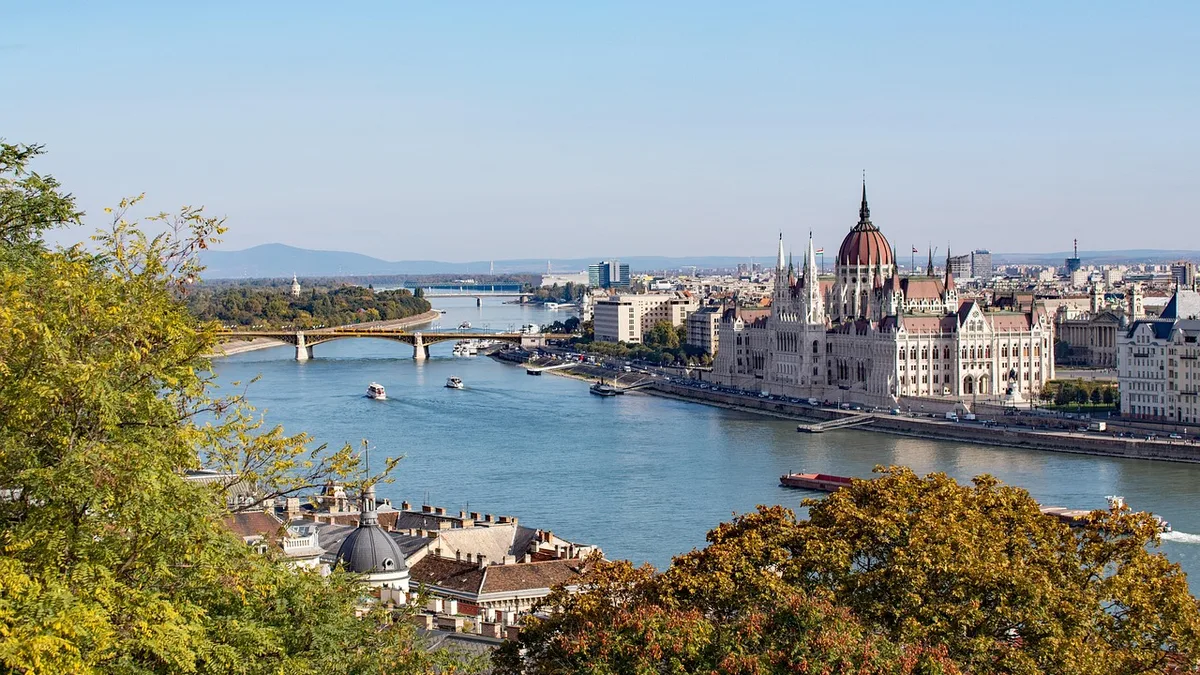
Budapest offers expats a high quality of life at a cost well below Western European capitals. Public transport is extensive, healthcare is accessible, international schools exist in several districts, and the property market remains open to foreign buyers. The district you choose — from the historic Fifth to the residential Twelfth — shapes your daily experience as much as the apartment itself.
Why expats choose Budapest
Budapest consistently ranks among the most liveable mid-sized cities in Central Europe, and the reasons are concrete rather than promotional. The city sits at the geographic centre of the continent, making it a practical base for frequent travellers. Direct flights connect Budapest Ferenc Liszt International Airport to most major European hubs in under three hours, and the airport is reachable from the city centre in roughly 30 minutes by car or the 100E express bus.
The Hungarian forint keeps everyday costs — groceries, restaurants, utilities — noticeably lower than in Vienna, Munich or Amsterdam, even as Budapest’s infrastructure and cultural offering match those cities in most respects. The city has two UNESCO World Heritage sites, a dense network of thermal baths, and a restaurant scene that has grown considerably over the past decade. For expats who work remotely or run businesses, the combination of reliable fibre internet, co-working spaces in Districts V, VI and VII, and a central European time zone is genuinely useful.
Property values, while rising, remain accessible compared to Prague or Warsaw for comparable central apartments. That gap is one of the main reasons foreign buyers — from EU nationals to investors from outside the bloc — continue to look at Budapest as a place to both live and own. You can read more about the underlying case for ownership on our why invest in Budapest page.
Understanding Budapest’s districts before you buy
Budapest is divided into 23 numbered districts (kerületek), and the number on a property listing tells you a great deal about the lifestyle attached to it. For expats, the choice usually comes down to five or six districts, each with a distinct character.
District V and VI attract buyers who want walkable access to the city’s commercial and cultural core. District II and XII appeal to families who prioritise green space, quieter streets and proximity to international schools. District XIII has seen significant new-build development along the Danube and is increasingly popular with younger expats who want modern apartments at prices below the inner Pest districts.
It is worth spending at least a few days in any district you are seriously considering — walking it at different times of day, checking the nearest metro or tram stop, and visiting the local market. The feel of Bartók Béla út in District XI on a Saturday morning is very different from the same hour on Király utca in District VII. Browse current Budapest property listings filtered by district to get a sense of what is available in each area.
Getting around: public transport and driving
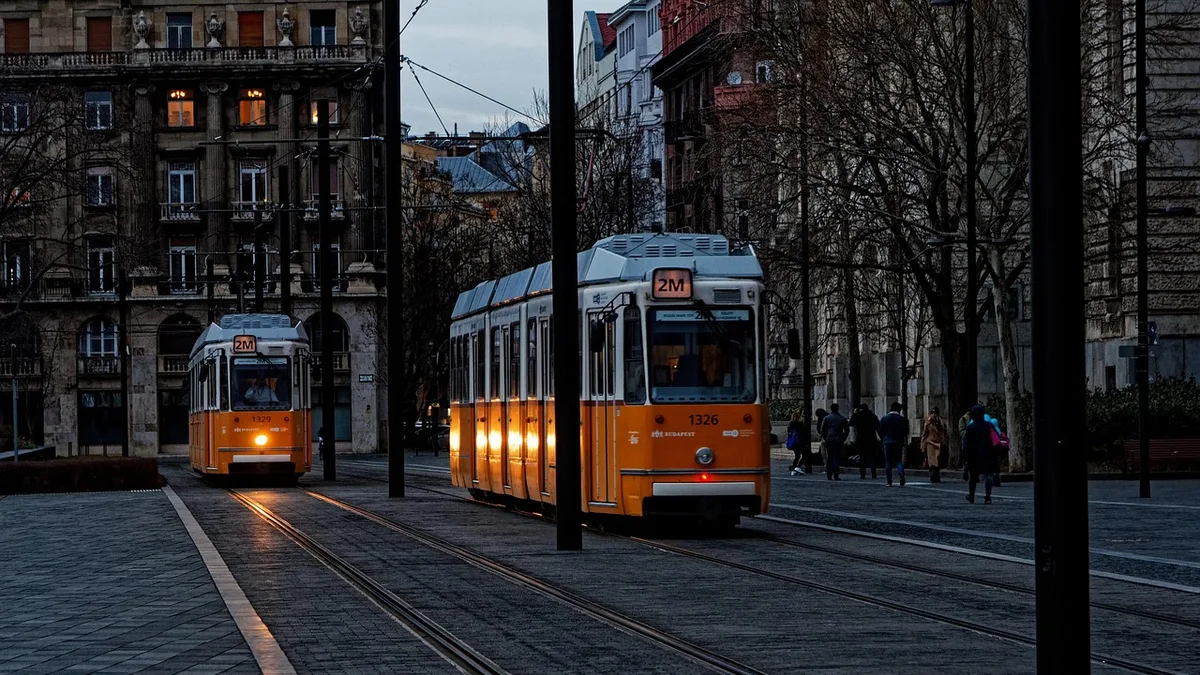
Budapest’s public transport network is run by BKK (Centre for Budapest Transport) and covers the city comprehensively. There are four metro lines, an extensive tram network, trolleybuses, and suburban HÉV rail lines that reach outer districts and nearby towns. A monthly pass covers all modes and is significantly cheaper than equivalent passes in Vienna or London. The M2 metro line connects Keleti railway station to the Buda side; the M4 line, opened in 2014, links Keleti to Kelenföld in the south-west.
Trams are often the fastest way to move along the main boulevards. The 4-6 tram running along the Grand Boulevard (Nagykörút) is one of the busiest tram lines in Europe and connects Districts VI, VII, VIII and IX efficiently. Night buses cover most routes when the metro closes, typically around 23:00.
Driving in Budapest is possible but not always practical in the inner districts. Parking is metered and scarce in Districts V through IX. Many expat families based in the Buda hills keep a car for weekend trips and school runs but use public transport for daily commutes into the centre. Hungary drives on the right, and an EU driving licence is valid without conversion. Non-EU licence holders typically need to convert within one year of establishing Hungarian residency.
Healthcare for expats in Budapest
Hungary has a state healthcare system (Nemzeti Egészségbiztosítási Alapkezelő, or NEAK) funded through social contributions. Expats who are employed in Hungary or registered as self-employed contribute to the system and are entitled to use public healthcare facilities. The quality of care varies between institutions; major teaching hospitals such as Semmelweis University’s clinical centres in Districts VIII and IX are well-regarded, particularly for specialist treatment.
Many expats, especially those not in formal Hungarian employment, opt for private health insurance. Several international insurers offer plans tailored to expats in Central Europe, and Budapest has a growing number of private clinics — including Medicover, FirstMed and Róbert Károly Private Hospital — that operate in English and accept international insurance directly. Dental care in Budapest is notably affordable by Western European standards and attracts medical tourists from across the EU.
If you are relocating with a family, it is worth confirming your insurance situation before you arrive. EU citizens covered by their home country’s EHIC (European Health Insurance Card) have access to state healthcare on the same terms as Hungarian citizens during temporary stays, but the EHIC does not substitute for comprehensive cover during long-term residency.
International schools and education options
Budapest has a reasonable number of international schools, most concentrated in the Buda side and the outer Pest districts. The most established options include the American International School of Budapest (AISB) in District XII, the British International School Budapest in District II, and the International School of Budapest (ISB) also in the Buda hills. These schools follow internationally recognised curricula — IB, British national curriculum, or American — and admit students from pre-school through to secondary level.
Fees at international schools are substantial and vary by institution and year group. Families relocating with employer support often have school fees covered as part of a relocation package; independent buyers should factor this cost into their overall Budapest budget before committing to a district. Proximity to school is a genuine daily-life consideration: families buying in Districts II or XII are typically within 15–20 minutes of the main international school campuses, while a purchase in District VII or XIII may mean a longer commute for children.
Hungarian state schools are free and generally well-structured, but instruction is in Hungarian. Some expat families whose children are young enough to acquire the language quickly do enrol in state schools, particularly if they plan to stay for several years. The Budapest city government also operates a number of bilingual state schools where some subjects are taught in English or German.
Cost of living: what to budget for
Budapest is cheaper than most Western European capitals for everyday expenses, but the gap has narrowed over the past five years as inflation affected Hungary more sharply than some EU neighbours. Groceries from a standard supermarket (Spar, Aldi, Tesco, or the local Coop network) cost roughly 20–35% less than in Austria or Germany for comparable items. Eating out at a mid-range Budapest restaurant remains affordable; a two-course lunch with a drink at a non-tourist establishment in Districts VI or IX typically costs well under €15 per person.
Utility costs in Budapest apartments vary significantly depending on the building type. Older panel-block apartments (panelházak) can carry higher heating bills in winter than renovated period buildings with modern insulation — always ask for the energy performance certificate (EPC) before buying.
Monthly utility costs for a standard two-bedroom apartment depend heavily on the building’s energy rating and heating system. District heating (távfűtés) is common in older apartment blocks and billed at a fixed rate regardless of individual consumption, which can be either an advantage or a disadvantage depending on usage patterns. Newer builds and renovated properties increasingly use individual gas boilers or heat pumps, giving residents more control.
For expats used to Western salaries working remotely, Budapest’s cost base is genuinely comfortable. For those taking local Hungarian employment, salaries in most sectors are lower than in Western Europe, and the cost advantage narrows accordingly. The Hungarian personal income tax rate is a flat 15%, which is straightforward to understand and relatively low by EU standards.
Legal basics for foreign property buyers
EU citizens can buy residential property in Hungary on the same terms as Hungarian nationals, with no additional permits required. Non-EU citizens can also purchase property but must obtain a permit from the relevant county government office (járási hivatal); in practice this is a procedural step rather than a significant barrier for most buyers, and it is handled by a Hungarian lawyer as part of the standard purchase process.
Every property transaction in Hungary must be countersigned by a Hungarian lawyer (ügyvéd). The lawyer verifies the title deed, checks for encumbrances, drafts the sale and purchase agreement, and registers the transfer with the Land Registry (Földhivatal). Buyers should appoint their own independent lawyer rather than relying solely on the seller’s legal representative. Our safe property purchase legal service is designed specifically to guide foreign buyers through this process.
The standard costs on top of the purchase price include a 4% property transfer tax (vagyonátruházási illeték) for existing properties — with exemptions available for new builds under certain conditions — plus lawyer’s fees and land registry fees. VAT-inclusive new-build apartments are subject to different tax treatment. Buyers should get a clear written breakdown of all acquisition costs before signing anything. For a broader look at available properties, our properties for sale in Budapest page is a practical starting point, and our Buying Guide Budapest articles cover the purchase process in more detail.
If you plan to rent the property when not using it, or to manage it as a full investment, it is worth understanding the tax and licensing requirements for short-term rentals in Budapest. Regulations around platforms like Airbnb have tightened in recent years, and some districts have additional local rules. Structuring ownership through a Hungarian company can offer tax efficiencies in certain circumstances — our Hungarian company setup for property service covers this in detail.
Frequently asked questions
- Can non-EU citizens buy property in Budapest?
- Yes. Non-EU citizens can purchase residential property in Hungary, but they must apply for a permit from the relevant county government office. The process is handled by a Hungarian lawyer and is generally straightforward for straightforward residential purchases. Agricultural land has separate, more restrictive rules that do not apply to urban apartments.
- Which Budapest district is best for expat families with children?
- Districts II and XII on the Buda side are the most popular among expat families. Both offer green surroundings, quieter streets, and proximity to the main international school campuses. District XIII on the Pest side is a growing alternative for families who prefer new-build apartments and easy metro access to the centre.
- Is English widely spoken in Budapest?
- English is spoken in most professional, commercial and hospitality settings in Budapest, particularly among people under 40. In local shops, medical facilities and government offices, English proficiency varies. Learning basic Hungarian phrases helps in everyday situations, though it is not essential for living comfortably in the city as an expat.
- What is the property transfer tax when buying in Budapest?
- The standard property transfer tax for existing residential properties in Hungary is 4% of the purchase price. New-build apartments are typically subject to VAT rather than transfer tax, and specific exemptions may apply depending on the buyer’s situation. A Hungarian lawyer or tax adviser should confirm the applicable rate for any specific transaction.
- How does Hungarian public healthcare work for expats?
- Expats employed in Hungary or registered as self-employed contribute to the state health insurance system (NEAK) and can access public healthcare on the same terms as Hungarian citizens. Those not in formal employment are not automatically covered and typically need private health insurance. EU citizens can use their EHIC for temporary stays but it does not cover long-term residency.
- What are typical monthly costs for a two-bedroom apartment in Budapest?
- Monthly costs vary by district and building type. Common outgoings include building maintenance fees (közös költség), which range from roughly €50 to €200 per month depending on the building, plus utilities. District heating is billed separately in many older buildings. Buyers should request a full breakdown of monthly charges from the seller before completing a purchase.
- Is Budapest safe for expats?
- Budapest is generally considered a safe city by European standards. Violent crime rates are low. Petty theft — pickpocketing on crowded trams and in tourist-heavy areas of Districts V and VII — is the most common concern. Standard urban precautions apply. The city’s emergency services and police (Rendőrség) are reachable on the European emergency number 112.
- Do I need to speak Hungarian to complete a property purchase?
- No. The purchase process can be conducted in English with the help of a bilingual Hungarian lawyer, which is standard practice for foreign buyers. All legal documents are in Hungarian, but your lawyer will explain and translate the key terms. Having independent legal representation — rather than relying on the seller’s lawyer — is strongly recommended.