


Buda suits buyers who want quiet residential streets, green hills, and larger family homes — typically at higher per-square-metre prices. Pest suits those who want urban energy, short-term rental income, and easier access to the city’s commercial core. Your choice depends on whether lifestyle comfort or investment yield matters more to you.
The geography: what actually separates Buda from Pest
Budapest is two cities merged into one in 1873. The Danube river runs north to south through the middle, with Buda on the hilly western bank and Pest spread across the flat eastern plain. Nine bridges connect them, and the metro, tram, and bus networks make crossing the river routine. But the two sides have retained genuinely different characters that affect property values, tenant profiles, and daily life.
Buda occupies roughly one-third of the city’s area and contains districts I, II, III, XI, XII, and XXII. The Buda Hills rise steeply behind the riverbank, giving many properties elevated positions with views over the city. Pest holds the remaining districts — V through X, XIII through XXI — and is where the majority of Budapest’s population lives, works, and spends money.
For a buyer unfamiliar with the city, the simplest mental model is this: Buda is where many Budapestians aspire to live once they have a family and a car; Pest is where young professionals, students, and tourists concentrate. That distinction shapes everything from apartment sizes to achievable rents.
Lifestyle and character of each side
Buda is quieter. Streets in districts II and XII — areas like Pasarét, Zugliget, and Budakeszi út — are lined with detached houses, mature trees, and low-rise apartment buildings. The pace is suburban even close to the city centre. Residents tend to drive. The nearest metro line (Line 2) runs along the southern edge of Buda, so public transport connections to central Pest require a tram or bus first. That is not a hardship for residents with cars, but it matters for tenants who rely on public transport.
Pest is dense and walkable. District V (the Inner City), District VI (Terézváros), District VII (Erzsébetváros, the old Jewish Quarter), and District XIII (Újlipótváros) all have metro access, abundant cafés, restaurants, and cultural venues within walking distance. The nightlife is concentrated here, which is a draw for short-term rental guests and young long-term tenants alike.
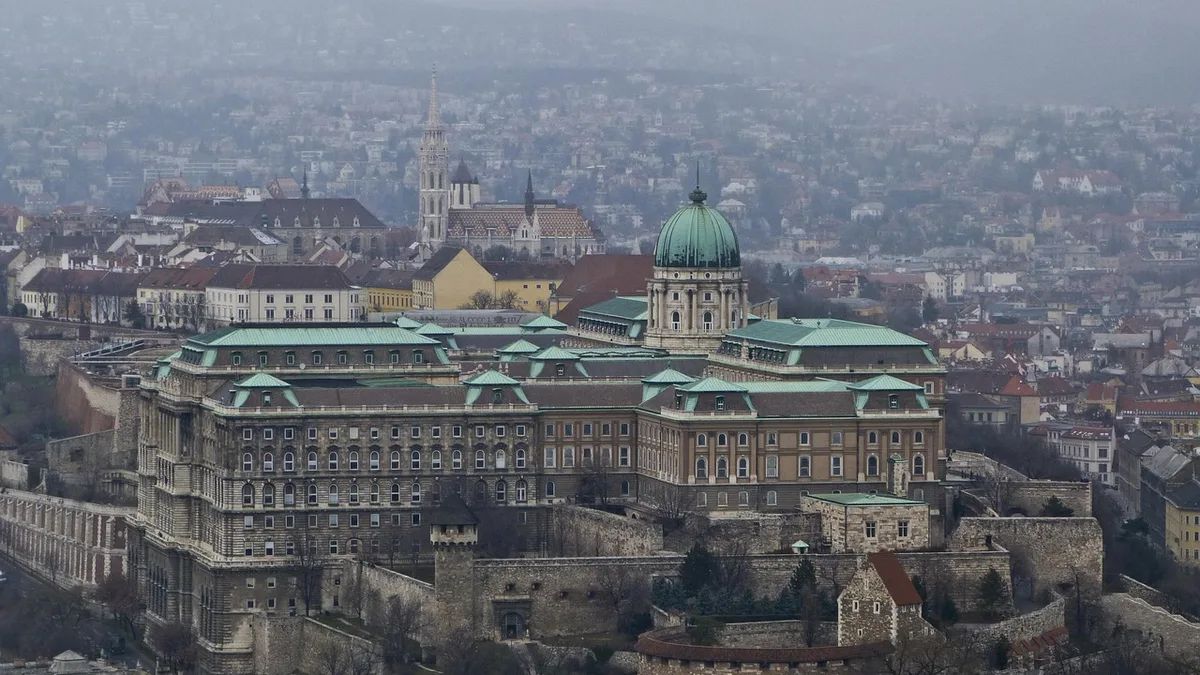
District I — the Castle District on the Buda side — is a special case. It is a UNESCO World Heritage site, heavily touristic, and has a very limited number of apartments available for purchase. Properties there are prestigious but illiquid; the buyer pool is small and transactions are infrequent.

Property types you will find on each side
Buda’s stock skews toward larger units. Family houses (detached and semi-detached), garden apartments, and spacious flats of 80–150 sqm are common in districts II and XII. Many buildings are post-war low-rise blocks or 1970s–1980s panel constructions in the outer districts. Renovated pre-war buildings exist but are less concentrated than in central Pest.
Pest’s stock is dominated by the classic Budapest apartment building: four to six storeys, built between 1880 and 1940, with high ceilings, ornate facades, and internal courtyards. These are the properties that photograph well and attract both tourists on short-term lets and young professionals on long-term leases. Studio and one-bedroom units of 30–55 sqm are abundant in districts V, VI, VII, and VIII. Newer developments — mostly built since 2010 — are concentrated in District XIII along the riverfront and in the outer districts of Pest.
If you are looking specifically at Budapest apartment sales, the widest selection of classic period apartments is in central Pest. Buda offers more variety in house formats and larger floor plans, but fewer units come to market at any given time.
Price comparison: Buda vs Pest per square metre
Prices vary significantly within each side depending on district, floor, condition, and view. The table below gives a realistic range based on current market conditions. These are indicative figures for residential property; commercial assets follow different pricing logic.
The most expensive addresses in Budapest are not automatically on the Buda side. A renovated apartment overlooking the Danube in District V can command prices comparable to Rózsadomb — the view and the postcode matter more than the bank of the river.
Rental yield potential on each side
For investors focused on rental income, Pest has a structural advantage. The concentration of tourists, students, and young workers in central Pest districts means both short-term and long-term rental demand is deeper and more consistent. A well-located one-bedroom apartment in District VII or XIII can achieve strong occupancy on short-term platforms and competitive monthly rents on long-term leases.
Buda yields are generally lower on a gross basis because purchase prices are higher relative to achievable rents. A family house in District XII commands a premium sale price, but the tenant pool for that type of property is narrower — mostly expat families on corporate relocation packages, which can be lucrative but less predictable than the broader Pest rental market.
If yield optimisation is your primary goal, our property management service targeting 8% rental yield focuses predominantly on central Pest assets for exactly this reason. That said, a well-priced Buda apartment near a metro station — such as along the Line 2 corridor in Kelenföldi or Kelenföld — can still deliver competitive returns.
Which districts should you focus on?
Rather than thinking in terms of Buda or Pest as a whole, most experienced buyers narrow down to two or three districts that match their criteria. Here is how the most relevant districts break down for foreign buyers:
- District V (Belváros-Lipótváros): The safest, most liquid market in Budapest. High entry price, low vacancy, easy to resell. Good for capital preservation.
- District VI (Terézváros): Andrássy Avenue, the Opera House, and strong period building stock. Balanced between lifestyle and yield.
- District VII (Erzsébetváros): The Jewish Quarter. High tourist footfall, strong short-term rental history, entry prices more accessible than V or VI.
- District XIII (Újlipótváros): Fast-growing, younger demographic, mix of renovated pre-war and new-build stock. Good long-term rental demand from professionals.
- District II (Buda): Rózsadomb and surroundings. Prestige residential. Best for buyers wanting a primary residence or a long-term family home rather than a yield-focused investment.
- District XII (Buda): Hegyvidék. Green, quiet, good schools nearby. Attracts expat families. Slower market with longer selling times.
- District XI (Buda): Kelenföld and Újbuda. More affordable Buda option with metro access. Practical choice for buyers who want Buda pricing without the Rózsadomb premium.
You can browse current stock across all districts in our Budapest property listings to get a feel for what is available at different price points right now.

Who should buy in Buda — and who should buy in Pest
The answer is rarely absolute, but the following profiles tend to align clearly with one side or the other.
Buy in Buda if: You are relocating to Budapest with a family and need space, green surroundings, and proximity to international schools (several are clustered in districts II and XII). You are buying a primary residence for personal use rather than rental income. You have a longer investment horizon and are comfortable with a smaller buyer pool when you eventually sell. You value quiet and privacy over walkability to restaurants and bars.
Buy in Pest if: Your primary goal is rental income — either short-term tourist lets or long-term professional tenants. You want the widest possible resale market, since Pest apartments attract both local and international buyers. You are buying a smaller unit (studio to two-bedroom) as an investment rather than a home. You want to be close to the city’s business districts, which are concentrated in Pest. You are interested in the investment case for Budapest as a growing Central European capital — that story is most directly expressed in central Pest’s property market.
There is also a middle ground: the Buda riverbank in districts I and II, particularly the Víziváros neighbourhood just below the Castle, offers Danube views and a Buda postcode while remaining within walking distance of central Pest via the Chain Bridge or Margaret Bridge. These properties are priced accordingly, but they genuinely combine the best of both sides.
Practical steps before you commit to either side
Whichever side appeals to you, the buying process in Hungary follows the same legal framework. As a foreign buyer — EU citizen or non-EU national — you can purchase residential property in Hungary, though non-EU nationals may need a permit from the local government office (this is generally a formality for residential purchases, but it adds time). Using a qualified local lawyer is not optional; it is the mechanism through which the transaction is secured.
- Define your primary goal: personal use, long-term rental, short-term rental, or capital growth. This determines which side and which district to target.
- Set a realistic budget including the 4% property transfer tax, legal fees (typically 0.5–1% of purchase price), and any renovation costs.
- Visit both sides in person before committing. Spend a morning in Rózsadomb and an afternoon in District VII — the difference in atmosphere is immediately clear.
- Engage a local real estate agent who operates across both sides and can give you an unbiased comparison rather than steering you toward their preferred stock.
- Use a Hungarian lawyer for the contract and title search. Our safe property purchase legal service covers this step and ensures the title is clean before any money changes hands.
- If you are considering a renovation project to add value, factor in realistic timelines and costs. The renovate and resell model works in both Buda and Pest, but the target buyer profile differs significantly between the two sides.
Visiting a district at different times of day — a weekday morning and a Friday evening — tells you more about its real character than any amount of online research.
Frequently asked questions
- Is Buda more expensive than Pest overall?
- Not uniformly. Premium central Pest districts — particularly District V along the Danube and parts of District VI — match or exceed Buda prices. Buda’s prestige areas like Rózsadomb (District II) and the Castle District (District I) are among Budapest’s most expensive. The outer districts of both sides are more affordable, with outer Pest generally offering the city’s lowest entry prices.
- Can foreigners buy property on either side of Budapest?
- EU citizens can buy residential property in Hungary without restriction. Non-EU nationals can also purchase, but typically require a permit from the county government office. This process is usually straightforward for residential purchases. Agricultural land has separate and stricter rules. A Hungarian lawyer should handle the permit application as part of the purchase process.
- Which side is better for Airbnb or short-term rentals?
- Central Pest — particularly districts V, VI, VII, and XIII — has historically generated stronger short-term rental demand due to tourist concentration and proximity to the city’s main attractions. Buda has lower tourist footfall and is less suited to short-term letting as a primary strategy. Regulatory changes in Budapest affecting short-term rentals should be checked district by district before purchase.
- Are there good schools on the Buda side for expat families?
- Yes. Several international schools are located in or near districts II and XII on the Buda side, which is one reason the area attracts expat families on longer postings. The British International School Budapest and the American International School of Budapest are both in the Buda Hills area. Proximity to these schools is a meaningful factor in Buda property demand from the expat community.
- How long does it take to buy a property in Budapest?
- From signed preliminary contract to full ownership registration, the process typically takes six to twelve weeks. The land registry registration itself can take several weeks after the contract is completed. Non-EU buyers requiring a government permit should add four to eight weeks for that process. Working with an experienced local lawyer keeps the timeline predictable.
- Is District VII (the Jewish Quarter) a safe area to buy?
- District VII is a well-established residential and tourist area in central Pest. It has undergone significant gentrification since the early 2000s. Like any dense urban neighbourhood, it has livelier streets, particularly around the ruin bars on weekends. For investment buyers, this activity is a feature rather than a drawback. For buyers seeking quiet, it may not be the right fit — but it is not an unsafe district by any reasonable measure.
- What is the property transfer tax in Hungary?
- The standard property transfer tax (vagyonszerzési illeték) for residential property purchases in Hungary is 4% of the purchase price or the assessed market value, whichever is higher. First-time buyers under certain conditions may qualify for a reduced rate or deferral. Your lawyer will advise on whether any exemptions apply to your specific situation.
- Should I use a Hungarian company to buy property in Budapest?
- Buying through a Hungarian Kft (limited liability company) can offer tax efficiency advantages for investors, particularly those planning to hold multiple properties or run a rental business. It also simplifies the purchase process for non-EU nationals by removing the individual permit requirement. The setup and ongoing accounting costs need to be weighed against the tax benefits for your specific situation.
Sources
- Hungarian Central Statistical Office (KSH) — population and housing data
- Magyar Nemzeti Bank (Hungarian National Bank) — House Price Index
- UNESCO World Heritage — Budapest, including the Banks of the Danube listing
- Hungarian Legal Database (Jogtar) — property transfer tax legislation
- Global Property Guide — Hungary residential property market overview