


Is District V Budapest a Good Area to Buy an Apartment?
District V, known locally as Belváros-Lipótváros, is the historic core of Pest and the most expensive district in Budapest to buy into, with resale prices typically running from about EUR 4,000 to EUR 6,500 per square metre against a citywide average closer to EUR 2,300 to EUR 2,900. It works well for buyers who want a prestige central address with steady demand from expats, diplomats and corporate tenants. It works less well for families needing space and green areas, and buyers planning to rely on short-term rental income should check current rules before committing, since Budapest has been tightening those regulations.
Table of contents
- Where District V is and what it includes
- The housing stock: building ages, sizes, condition
- Price per square metre in District V, 2026
- Rents and who is renting here
- Transport and daily life
- Risks: noise, flood zone, short-term rentals, heating
- Best streets and pockets to avoid
- Verdict: who should buy in District V
- FAQ
Where District V is and what it includes
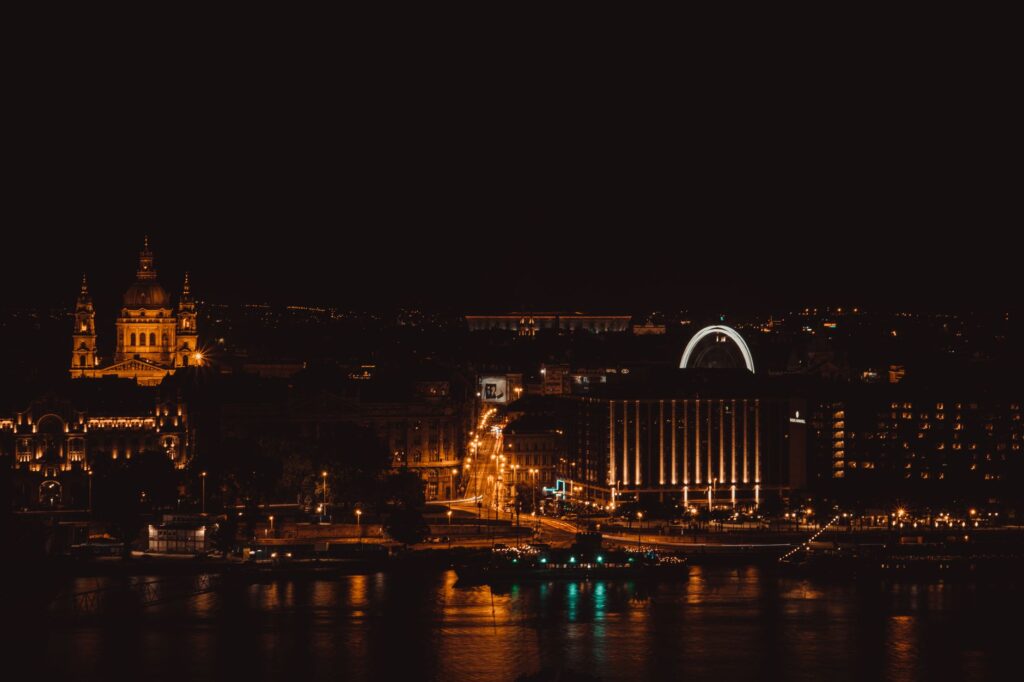
District V sits directly on the Pest bank of the Danube, facing the Castle District and Gellért Hill across the river. It is the smallest district by area in Budapest and also the innermost, bordered by the river to the west and the Kiskörút, the inner ring road (Károly körút, Múzeum körút and their continuation), to the east, where it meets District VI, VII and VIII. Within that small footprint you get two distinct halves. Belváros is the older southern part around Váci utca, Vörösmarty tér and Ferenciek tere. Lipótváros is the northern half, built up mostly in the 19th century as the government and banking quarter, and it includes Parliament, Szabadság tér and Szent István Bazilika.
This is not a district you compare to leafy Buda hills or family suburbs. Everything here is walkable, dense and built for pedestrians, tourists, office workers and residents living on top of one another. That character is exactly what drives both the appeal and the price.
The housing stock: building ages, sizes, condition
Most buildings in District V date from the late 19th century to the 1930s, eclectic and neoclassical facades with courtyards, wide stairwells and high ceilings, alongside a meaningful pocket of Bauhaus and Art Deco buildings in Lipótváros from the 1920s and 1930s. Genuinely new construction is rare because the district is already fully built up and much of it is under heritage protection, so what you find is either original stock in varying states of repair, or units that have already gone through a full gut renovation.
Flat sizes swing widely. Studios and one-bedroom conversions of around 30 to 45 square metres are common, cut out of larger 19th century apartments, often with lower ceilings than the original layout or awkward internal room shapes as a result of subdivision. At the other end you still find original grand apartments of 100 to 200 square metres with 3.5 to 4 metre ceilings, herringbone parquet and street-facing balconies, mostly on the piano nobile floors. Lifts exist in the majority of buildings but many are original early 20th century installations, small, slow, and sometimes not rated for luggage or buggies, so check this in person rather than assuming from photos. Courtyards are near universal and range from decorative to purely functional light wells.
Condition is the variable that catches most foreign buyers out. A polished listing photo does not tell you whether the building's common areas, roof, facade or electrical risers have been renovated, and in older Budapest buildings the apartment can be beautifully redone while the building's shared systems are decades overdue. Ask for the co-ownership meeting minutes (közgyűlési jegyzőkönyv) and the state of the common charge fund before you make an offer.
Price per square metre in District V, 2026
District V consistently prices at or near the top of the Budapest market. The figures below are indicative ranges to orient a buyer, not a valuation, and you should check them against live listings and a recent comparable sale before pricing an offer.
| Area | Typical resale price per sqm (EUR, indicative) | Notes |
|---|---|---|
| District V, prime addresses (Szabadság tér, riverfront, Vörösmarty tér) | 6,000 to 8,000+ | Top of the Budapest market |
| District V, general average | 4,000 to 6,500 | Wide range depending on condition and floor |
| District VI, Terézváros | 3,200 to 4,800 | Andrássy út and around, comparable prestige, slightly cheaper |
| District VII, Erzsébetváros | 2,800 to 4,200 | Jewish quarter, party district pricing pressure both ways |
| Budapest, citywide average | 2,300 to 2,900 | All districts blended |
The premium in District V reflects scarcity of supply as much as demand. There is almost no way to add new stock, so pricing tracks renovation quality and floor level more than it tracks the broader city cycle. A well-renovated second floor apartment on a quiet Lipótváros street can carry a materially higher price per square metre than an unrenovated apartment two streets away, even within the same postcode. Browse current stock on our apartments for sale in Budapest page to see how District V listings compare with other central districts right now.
Rents and who is renting here
Long-term rents in District V run roughly EUR 750 to 1,100 a month for a renovated studio or one-bedroom of 35 to 45 square metres, and EUR 1,200 to 1,800 for a two-bedroom of 60 to 80 square metres, with prime Lipótváros addresses and river views pushing above that. These are indicative figures that move with the season and with renovation standard, so treat them as a starting range rather than a quote.
The tenant base is unusual for Budapest. Because of the concentration of embassies, ministries, banks and multinational headquarters in Lipótváros, a large share of long-term tenants are diplomats, corporate relocations and senior professionals on company housing budgets rather than local students or young Hungarian families, who are largely priced out of the district. That gives landlords a relatively stable, well-funded tenant pool but it also means demand is more sensitive to corporate relocation cycles than to the general Budapest rental market. Short-term and tourist demand around Váci utca and the Danube promenade has historically been very strong, though see the risks section below before you plan your numbers around it.
Transport and daily life
District V is arguably the best-connected district in the city. Deák Ferenc tér, where all three original metro lines, M1, M2 and M3, converge, sits right on the district's eastern edge, and the newer M4 is a short walk away at Kálvin tér and Fővám tér just across the boundary. Tram 2 runs along the Danube embankment and is one of the more scenic tram routes in Europe, useful for daily commuting as much as sightseeing. Bus coverage is dense and most of the district is genuinely walkable end to end in 20 to 25 minutes, which matters because parking is scarce and expensive and most residents here do not rely on a car. Cycling infrastructure has improved along the river and around Szabadság tér, though the older core streets are narrow and cobbled.
Daily life amenities are excellent for anyone who wants everything on foot: supermarkets, pharmacies, cafes, restaurants at every price point, and the Basilica, Parliament and Danube promenade as your everyday backdrop. What District V lacks is green space and playgrounds for young families, and grocery shopping in the very centre skews toward smaller, pricier convenience formats rather than large supermarkets.
Risks: noise, flood zone, short-term rentals, heating
Noise is the most predictable complaint from new owners. Váci utca, the streets immediately around Deák Ferenc tér, and pockets near Ferenciek tere carry heavy tourist foot traffic and late-night bar noise, particularly in summer. Lipótváros, by contrast, quiets down significantly in the evening because it is dominated by offices and government buildings rather than nightlife, so the noise profile of District V varies enormously by street, not just by district.
Flood risk exists because the district sits directly on the Danube, but Budapest's flood defence system, including permanent embankments and mobile barrier sections installed for high water events, has kept the historic centre protected through the major flood events of recent decades. It is still worth asking a local agent or the building management whether the specific address has any flood insurance conditions attached, particularly for ground floor commercial units.
Short-term rental regulation is the item that changes fastest and matters most if your business case depends on it. Budapest has moved in recent years to restrict short-term, under-30-day rentals in residential buildings across parts of the city, and rules have tightened further at the district level in the inner core. If you are buying in District V specifically to run Airbnb-style rentals, do not assume the current licensing position will hold. Confirm the live rules with the district municipality and with a local lawyer before you sign, and build your return projections on a long-term rental scenario as the fallback.
Heating in most older District V buildings is individual gas convector heating, known locally as cirko, rather than centralised district heating, which means running costs and any boiler certification requirements sit with the individual owner rather than the building. Confirm the heating type and the age of the boiler during due diligence, since replacing an old gas convector system is a real cost that rarely shows up clearly in a listing.
The single most expensive mistake buyers make here: buying an apartment in District V primarily to run it as a short-term tourist rental without first confirming, in writing, the current licensing and zoning position for that specific address. Rules have already tightened once and can tighten again, and a flat priced on Airbnb yields that later has to convert to a long-term let can underperform the numbers you were shown by a wide margin.
Best streets and pockets to avoid
Szabadság tér and the streets immediately around it, including Hold utca, Zrínyi utca and Aulich utca, offer the quietest, most residential feel in District V while still being fully central, and they carry some of the district's highest per square metre pricing for exactly that reason. Sas utca and the streets between Deák tér and the Basilica offer a similar quiet, prestige profile at slightly lower prices.
Váci utca itself and the immediate blocks around Ferenciek tere and Deák Ferenc tér are excellent for commercial use, short-term guest appeal and footfall, but ground and lower floor residential units here suffer from constant noise and are generally better suited to investors comfortable with that trade-off than to owner-occupiers wanting a quiet home.
Verdict: who should buy in District V
District V is a strong buy for someone who wants a prestige central Budapest address, is comfortable paying the top end of the city's per square metre pricing, and has a realistic rental plan built around long-term corporate and expat tenants rather than an assumed Airbnb yield. It is a weaker fit for buyers on a tight budget, for families who need outdoor space and lower-cost schooling nearby, or for anyone whose investment case cannot survive tighter short-term rental rules. If you are weighing District V against other central districts, it is worth reading our broader case for why to invest in Budapest before narrowing to a single district, and our team at Buy Budapest Apartments can walk you through specific buildings and current asking prices on request.
FAQ
Is District V Budapest expensive compared to other districts?
Yes. District V is typically the most expensive or second most expensive district in Budapest by price per square metre, with resale prices generally running EUR 4,000 to 6,500 per square metre against a citywide average nearer EUR 2,300 to 2,900. Prime addresses around Szabadság tér and the riverfront can exceed EUR 7,000 per square metre. These are indicative ranges and should be checked against current listings.
What is the average price per square metre in District V Budapest?
A reasonable working range for 2026 is EUR 4,000 to 6,500 per square metre for a typical renovated resale apartment in District V, with unrenovated units priced lower and prime Lipótváros or riverfront addresses priced higher. Actual price depends heavily on floor, renovation standard and street, so treat any single figure as a starting point rather than a fixed benchmark.
Can foreigners buy apartments in District V Budapest?
Yes. Non-Hungarian citizens can buy residential property in Budapest, including in District V, through a standard permit process handled alongside the purchase, and EU citizens generally face fewer formalities than non-EU buyers. The process and required paperwork are the same across districts. See our guide to the apartment sales process in Budapest for the specific steps and documents involved.
Is District V good for renting out to tourists (Airbnb)?
Historically demand has been strong given the location on Váci utca and the Danube promenade, but Budapest has restricted short-term rentals in parts of the city in recent years and inner districts have seen further tightening. Confirm the current licensing position for the specific address with the district municipality before buying with a short-term rental business plan, and have a long-term rental fallback in your financial projections.
Is District V Budapest safe?
District V is generally considered one of the safer districts in Budapest given the concentration of government buildings, embassies and CCTV coverage in the centre. As in any dense tourist area, petty theft and pickpocketing around Váci utca and Deák Ferenc tér are the main practical risk, more so than violent crime, and normal city precautions apply.
Which is better, District V or District VI for buying?
District V offers a more prestigious, government and embassy-district address with slightly higher pricing, while District VI, Terézváros, around Andrássy út offers a comparable central location at a somewhat lower price per square metre, generally EUR 3,200 to 4,800 against District V's EUR 4,000 to 6,500. The choice usually comes down to budget and whether proximity to the Danube and Parliament matters more to the buyer than a marginally lower entry price.
Are there flood risks in District V Budapest?
District V sits directly on the Danube, but the historic centre is protected by Budapest's permanent and mobile flood defence infrastructure, which has held through major flood events in recent decades. Buyers should still confirm with the building management or a local agent whether a specific address, particularly ground floor commercial space, carries any flood-related insurance conditions.
What type of heating do apartments in District V have?
Most older buildings in District V use individual gas convector heating, locally called cirko, rather than centralised district heating, which means heating costs and boiler maintenance sit with the individual apartment owner. Confirm the age and condition of the boiler during due diligence, since a replacement is a real cost that is not always obvious from a standard listing.
See also: District VI Terézváros Budapest: Is It Good to Buy?.
See also: District VII Erzsébetváros Budapest: Good Area to Buy?.
See also: District VIII Budapest: Is Józsefváros a Good Area to Buy?.