


District XXI (Csepel) Budapest: Is It a Good Area to Buy?
Direct answer: District XXI, Csepel, is Budapest's largest and most affordable residential district, sitting on an island south of the city centre. Prices sit well below the Budapest average, mostly for 1970s to 1990s panel flats and older worker housing near the former Weiss Manfréd steel works. It suits buyers chasing rental yield from long-term local tenants rather than tourists. Transport improved with the Tram 1 extension and the H7 suburban railway, but Csepel still feels separate from inner Budapest and has little of the expat or nightlife infrastructure found in Districts V to IX.
Table of Contents
- Where Is District XXI (Csepel) and What Are Its Boundaries?
- Housing Stock: Building Ages, Flat Sizes and Condition
- Csepel Property Prices and Rents vs the Budapest Average
- Who Buys and Rents in Csepel
- Transport: Getting From Csepel to Central Budapest
- Pros, Cons and Risks of Buying in Csepel
- Best Pockets in Csepel, and Ones to Avoid
- Verdict: Is Csepel a Good Place to Buy?
- FAQ
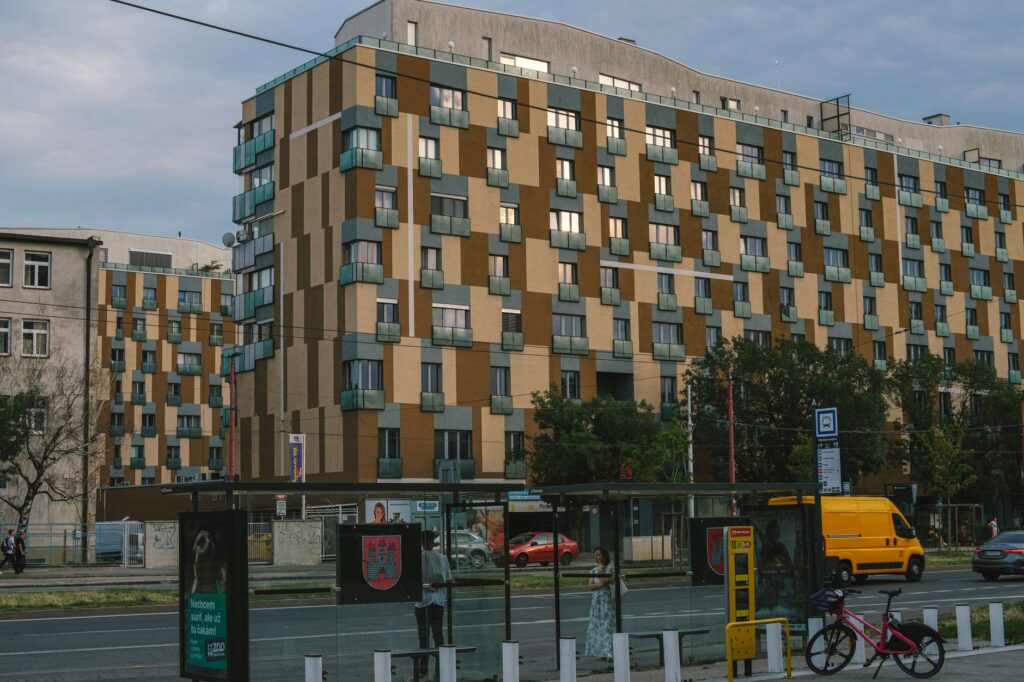
Where Is District XXI (Csepel) and What Are Its Boundaries?
Csepel occupies the northern half of Csepel Island, a long strip of land in the Danube that sits south of central Pest and is separated from it by the Soroksári Danube branch. District XXI is bordered by District IX (Ferencváros) and District XX (Pesterzsébet) to the north and northeast across the water, and it runs south toward Szigetszentmiklós, which is outside Budapest's city limits entirely. The district is split informally into a northern, more built-up zone around the old town centre and Királyerdő, and a southern zone dominated by the former Csepel Works and the Freeport (Szabadkikötő), which is industrial and logistics land rather than housing.
This geography matters for buyers because Csepel is genuinely an island district. Every route in or out crosses a bridge, and that single fact shapes commute times, flood exposure and how the area is perceived compared with districts that sit directly on the Pest grid.
Housing Stock: Building Ages, Flat Sizes and Condition
Most of Csepel's housing dates from two distinct periods, and the gap between them is the first thing to understand before you look at listings.
The older stock is early to mid-20th century worker housing built for staff of the Weiss Manfréd steel and munitions works, concentrated around Csillagtelep and the historic centre. These are low-rise blocks, often three to four storeys with no lift, flats of roughly 40 to 55 square metres, solid masonry construction, and a real need for renovation in many cases: old wiring, single-pane windows, shared courtyards that have not been touched in decades.
The dominant stock by volume is the socialist-era prefabricated panel housing built mostly in the 1970s and 1980s, similar to what you'll find in District XX or the outer parts of District III. Typical panel flats run 50 to 65 square metres with two or three rooms, built-in district heating, and lifts in the taller blocks (five storeys and up). Condition varies block by block depending on whether the building's reconstruction fund (a reserve collected through the monthly common charge, or közös költség) has actually paid for insulation, roof work and lift modernisation, or whether it has sat untouched since the 1980s. Ask for the last three years of the building association's minutes before you commit. This is the single most useful document a foreign buyer rarely thinks to request.
A smaller number of newer developments have gone up over the last decade or so near the Danube and around Királyerdő, offering 60 to 90 square metre family apartments with lifts, underground parking and better energy ratings. Parts of the old Csepel Works site have been earmarked for redevelopment into residential or mixed-use schemes at various points; status and timelines on any specific project should be confirmed directly, since these plans change and move slowly.
Csepel Property Prices and Rents vs the Budapest Average
Csepel is consistently one of the cheapest districts in Budapest on a per-square-metre basis. The figures below are indicative only, pulled together to show relative positioning, and should be checked against current listings before you make any decision.
| Area | Indicative price per sqm (HUF) | Indicative rent, 2-room flat/month (HUF) |
|---|---|---|
| Csepel (District XXI) | 450,000 to 650,000 | 140,000 to 190,000 |
| Kispest (District XIX) | 500,000 to 700,000 | 150,000 to 200,000 |
| Ferencváros (District IX) | 900,000 to 1,200,000 | 220,000 to 300,000 |
| Budapest average | 850,000 to 1,000,000+ | 200,000 to 280,000 |
The gap between Csepel and districts closer to the river centre is substantial, often 40 to 50 percent lower per square metre. That discount is the whole investment case for the area, and it has stayed roughly consistent for years rather than closing, because Csepel's transport and image haven't changed as fast as its building stock has aged. For a broader read on how Csepel's numbers sit against the rest of the city, see our guide to why to invest in Budapest, and check live comparisons on our current listings for sale.
Who Buys and Rents in Csepel?
Csepel's buyer and tenant pool is almost entirely local and almost entirely long-term. The district has:
- Hungarian families and first-time buyers priced out of districts closer to the centre, drawn by lower entry prices and more square metres for the money.
- Long-term renters who work locally or commute by HÉV, including blue-collar workers connected to the logistics and light industry still operating in the south of the island.
- A small number of retirees and multi-generation households in the older worker housing, where flats have often stayed in the same family for decades.
- Very little student demand compared with districts near the universities, and almost no short-term or tourist demand. Csepel has no hotel district, no nightlife strip and nothing resembling the Airbnb economy of Districts V, VI or VII.
Rental demand exists and is steady, but it is yield-driven local letting, not tourist arbitrage. That distinction should drive your entire strategy here.
The most expensive mistake buyers make in Csepel: assuming the low purchase price will translate into Airbnb-style short-term rental income similar to downtown districts. It won't. Csepel has essentially no tourist footfall, no nearby attractions and no short-stay demand to speak of. Buyers who budget a project around short-term nightly rates here typically end up switching to long-term letting at a lower yield than planned, after months of empty calendar days. If short-term rental income is the goal, that money belongs in Districts V, VI, VII or IX, not Csepel.
Transport: Getting From Csepel to Central Budapest
Transport is Csepel's biggest structural weakness and its biggest recent improvement at the same time.
| Mode | Route detail | Approx. journey to centre |
|---|---|---|
| Tram 1 | Extended to Csepel, connects to the ring tram line serving District IX, XI and beyond | Roughly 25 to 40 minutes to Blaha Lujza tér area, depending on origin point |
| HÉV H7 | Suburban rail from central Csepel to Közvágóhíd / Boráros tér, District IX | Around 20 to 30 minutes to Boráros tér, then metro/tram onward |
| Bus routes | Multiple lines connecting Csepel's neighbourhoods to the HÉV and tram terminals | Varies by pocket, add 10 to 20 minutes for feeder buses |
| Car / M0 ring road | M0 passes close to southern Csepel, useful for driving rather than inner-city commuting | Depends heavily on traffic and time of day |
There is no metro on Csepel and none planned in any near-term timeframe that we'd treat as confirmed, so confirm current transport plans locally rather than relying on older news. For anyone without a car, daily life revolves around the tram and HÉV terminals, and how far your building sits from them changes the practical commute by a large margin, often 15 minutes or more on foot plus a bus leg.
Pros, Cons and Risks of Buying in Csepel
| Pros | Cons and risks |
|---|---|
| Lowest entry prices of almost any Budapest district | Longest commute to the centre of the main residential districts |
| Larger flats for the money, more square metres per forint | Virtually no short-term rental or tourist demand |
| Quiet, genuinely residential, low nightlife noise | Older housing stock needs renovation checks, especially worker housing |
| Green pockets around Királyerdő and the riverfront | Being an island, some low-lying areas carry flood exposure; Budapest's flood defences are generally solid but confirm the specific plot's flood protection category before buying |
| Steady long-term rental demand from local tenants | Limited expat and international buyer community, fewer English-speaking services nearby |
| Tram 1 extension has genuinely improved connectivity in the last decade | Industrial legacy in the south of the island, some pockets still feel neglected |
On heating: most panel flats run on district heating (távfűtés), billed centrally and generally predictable, while much of the older worker housing uses individual gas heating, which gives you more control but a less predictable bill. Ask which system a specific flat has before pricing out running costs, since the difference affects monthly outgoings meaningfully.
Best Pockets in Csepel, and Ones to Avoid
Not all of Csepel performs the same way, and treating it as one homogeneous zone is a common error.
- Királyerdő: the district's most sought-after residential pocket, green, mostly family houses and some newer apartment blocks, a reasonable walk or short bus ride from the tram and HÉV terminals.
- Csepel town centre, around the HÉV and tram terminus: convenient for transport, a mix of older and panel housing, good for buyers prioritising commute time over green space.
- Riverfront stretches near the Danube: newer builds here command a premium over the rest of the district and offer better views and finishes, worth comparing directly against older stock inland.
- Areas close to the old Csepel Works and the Freeport in the south: cheapest on paper but furthest from transport, surrounded by light industry and logistics land, generally the weakest pocket for resale or rental demand. We'd treat this as the area to avoid unless the price discount is exceptional and you've walked the block yourself.
Verdict: Is Csepel a Good Place to Buy?
Csepel is a good buy for a specific type of investor: someone targeting entry price and rental yield from local long-term tenants, comfortable with an island commute, and not chasing tourist income. It is not a good fit for anyone wanting walkable nightlife, a strong expat community, or short-term rental upside, because none of those exist here in meaningful supply. If your goal is capital growth tied to Budapest's broader international buyer market, you'll likely get a stronger story in Districts VII, VIII or IX, where demand is deeper and more liquid.
If the numbers still work for you after reading this, the next sensible step is comparing specific Csepel listings against similar flats in Kispest and District XX, which compete directly on price and offer slightly better transport in some pockets. Browse current options across all properties on our site, or talk to our team through the contact page about whether a given Csepel listing's building has the renovation history and heating setup you'd need to confirm before making an offer.
FAQ
Is Csepel a safe area to live in Budapest?
Yes, Csepel is generally considered a safe, quiet residential district with crime levels broadly in line with other outer Budapest districts. It lacks the late-night street activity of nightlife-heavy inner districts, which many residents see as an advantage rather than a risk. As with any area, specific streets near industrial zones or isolated pockets warrant a personal walk-through before buying.
What is the average price per square metre in District XXI Csepel?
Indicative ranges put Csepel at roughly 450,000 to 650,000 HUF per square metre, well below the citywide Budapest average of around 850,000 to 1,000,000 HUF or more. These figures move with the market and should always be checked against current listings rather than treated as fixed.
Is Csepel good for renting out to tenants?
Csepel works well for long-term rental to local tenants, with rental yields often attractive relative to the low purchase price. It performs poorly for short-term or tourist rental, since the district has almost no visitor footfall, no nearby attractions and essentially no Airbnb-style demand compared with central districts.
Are there flood risks in Csepel?
Being on an island in the Danube, parts of Csepel, particularly lower-lying areas near the water, carry some flood exposure historically. Budapest's flood defences have generally held up well in recent decades, but buyers should confirm the specific flood protection category and any history of water damage for the exact building before purchasing.
What type of apartments are available in Csepel?
The market is dominated by 1970s to 1990s panel flats of 50 to 65 square metres, plus older early-20th-century worker housing of 40 to 55 square metres near the historic centre, much of which needs renovation. A smaller supply of newer builds, 60 to 90 square metres with lifts and parking, has appeared near the riverfront and Királyerdő over the last decade or so.
Is Csepel a good investment for foreign buyers?
Csepel suits foreign buyers specifically looking for low entry price and steady long-term rental yield rather than capital growth tied to Budapest's international buyer demand, which concentrates in districts closer to the centre. It is not well suited to anyone planning on short-term rental income or expecting a strong expat rental or resale market locally.
Which part of Csepel is best to buy in?
Királyerdő is generally the strongest residential pocket for green space and family appeal, while the area around the HÉV and tram terminus offers the best transport convenience. The southern end of the district, near the old Csepel Works and Freeport, is the weakest pocket for resale and rental demand and is worth avoiding unless the discount is significant.
How do I get from Csepel to central Budapest?
The Tram 1 extension connects Csepel to Budapest's ring tram network, reaching the Blaha Lujza tér area in roughly 25 to 40 minutes depending on your starting point. The HÉV H7 suburban railway offers an alternative route to Boráros tér and Közvágóhíd in District IX in around 20 to 30 minutes, with onward metro or tram connections from there.
See also: Is District XXIII (Soroksár) Budapest a Good Area to Buy?.