


Is the Palace Quarter a Good Place to Buy Property in Budapest?
The Palace Quarter (Palotanegyed), the historic core of District VIII, is a good buy for people who want 19th century architecture and a central location without paying District V or VI prices. Expect renovated flats from roughly 1,000,000 to 1,400,000 HUF per square metre, rising near Múzeum körút and Mikszáth Kálmán tér, against a citywide average usually quoted between 900,000 and 1,100,000 HUF per square metre. Condition and exact street matter more here than in almost any other district, so confirm both before you sign anything.
Contents
- Where exactly is the Palace Quarter?
- The housing stock: building ages, sizes and condition
- Palace Quarter Budapest property prices and rents
- Who buys and rents in the Palace Quarter
- Transport and amenities
- Pros, cons and the real risks
- Best streets, and ones to approach carefully
- Is the Palace Quarter a good place to buy? Our verdict
- FAQ
Where exactly is the Palace Quarter?
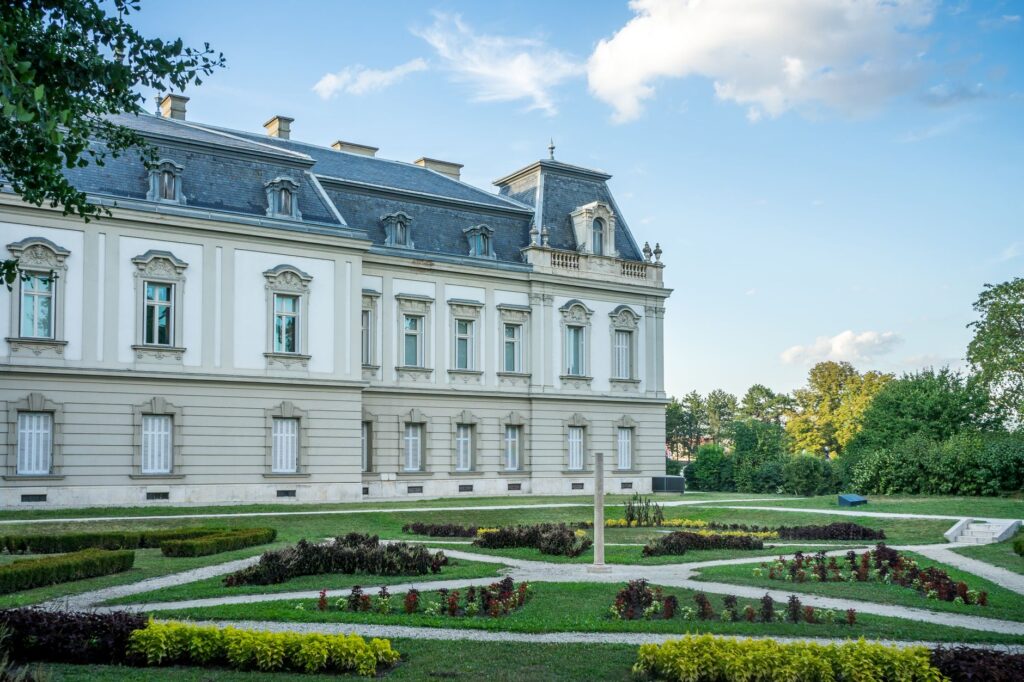
The Palace Quarter sits inside District VIII (Józsefváros), roughly bounded by Múzeum körút to the west, Rákóczi út to the north, József körút to the east and Üllői út to the south. It takes its name from the number of grand 19th century town palaces built here by aristocratic and wealthy families, many of which now house university faculties, museums or institutes rather than private residences.
It is worth being precise about this because District VIII is large and uneven. The Palace Quarter is the gentrified, architecturally protected core. Head south and you reach the Corvin Quarter, a newer regeneration zone with modern blocks and a shopping centre. Head further east and you reach Magdolna Quarter and Orczy areas, which have a different reputation and a different buyer profile entirely. A listing simply tagged "District VIII" tells you almost nothing until you know which of these you are actually looking at.
The housing stock: building ages, sizes and condition
Most buildings date from the late 1800s to the early 1900s, built in eclectic and neoclassical styles with high ceilings, often 3.2 to 4 metres, large windows, ornate stairwells and internal courtyards. This is the main draw for buyers who want period character they cannot get in a Soviet-era panel block or a new build tower.
Flat sizes vary widely, from roughly 35 to 150 square metres, because many original large apartments were subdivided decades ago into smaller units. Some buildings have been fully renovated to a modern standard with new wiring, plumbing and shared facilities. Others sit in original, untouched condition, sometimes beautiful, sometimes requiring a full gut renovation. There is rarely a middle ground in older flats here, so inspect in person rather than relying on photos.
Lifts are inconsistent. Many 19th century buildings were built without one, and some have had a small lift retrofitted into the stairwell since, while others still have none at all. If you are buying above the second or third floor, this affects both resale value and who will want to rent from you later, particularly older tenants.
Heating is typically individual gas convector heaters (konvektor) in unrenovated flats, with more renovated units switched to individual gas boilers or modern radiators. District heating, common in the city's panel estates, is far less typical here.
A specific point for this district: many buildings carry monument protection status because of their historic facades. That means window replacement, facade work and sometimes internal changes require permission and approved materials, which raises renovation cost and timeline compared with an unprotected building elsewhere in Pest.
Palace Quarter Budapest property prices and rents
The figures below are indicative only. Budapest pricing moves constantly and varies street by street within the same neighbourhood, so treat this as a starting point and check it against our current listings before you budget for anything specific.
| Area | Indicative price (HUF/sqm) | Typical one-bed rent (HUF/month) |
|---|---|---|
| Palace Quarter, unrenovated | 700,000 to 900,000 | 160,000 to 210,000 |
| Palace Quarter, renovated | 1,000,000 to 1,400,000 | 200,000 to 280,000 |
| District VIII overall average | 800,000 to 1,050,000 | 170,000 to 240,000 |
| Budapest citywide average | 900,000 to 1,100,000 | 200,000 to 280,000 |
| District VI (Terézváros), for comparison | 1,100,000 to 1,500,000 | 230,000 to 320,000 |
| District V (Belváros), for comparison | 1,400,000 to 2,000,000+ | 280,000 to 400,000+ |
The pattern to notice: a renovated Palace Quarter flat often prices close to the citywide average, sometimes above it near Mikszáth Kálmán tér and Múzeum körút, while an unrenovated one can still be found well below it. That spread is bigger here than in most Pest districts, which is both the opportunity and the risk.
The most expensive mistake buyers make here is judging a flat purely on its advertised price per square metre without checking the building's monument protection status and the condition of its shared structure. Many Palace Quarter buildings are listed for their historic facades, so window and facade work require permission and specific materials. If the building is overdue for facade renovation, owners can be hit with a one-off special assessment (rendkívüli közös költség) running into hundreds of thousands of forints, on top of the usual monthly közös költség. Ask for the building's maintenance history and recent assembly (közgyűlés) minutes before you sign, not after.
Who buys and rents in the Palace Quarter
Demand for renting is anchored by students and staff from nearby university faculties, including Semmelweis University's medical campus buildings, ELTE and Corvinus, all within walking distance. That gives the area a stable base of tenants, which is attractive to buyers focused on long term rental income rather than speculation.
Buyers themselves split into three rough groups: Hungarian professionals priced out of District V and VI who want central living with more space for the money, foreign investors drawn by the architecture and relative value compared with the prime downtown districts, and a smaller number of owner-occupiers, often expats, who want a period flat within walking distance of the centre.
Short-term, tourist-style letting exists here but is a smaller part of the market than in District V or VII. Budapest has tightened short-term rental regulation in recent years, including restrictions on Airbnb-style letting in ordinary residential buildings in parts of the city, and the rules differ by district and sometimes by building. If your plan depends on short-term rental income, confirm the current regulation for District VIII specifically, and check the building's own house rules, before you commit.
Transport and amenities
The quarter sits close to two metro lines. The M3 (blue line) touches its southern edge at Corvin-negyed and Semmelweis Klinikák, and the M4 (green line) is a short walk north at Rákóczi tér and Baross utca. Trams 4 and 6 run along the Nagykörút, the district's western boundary, and several bus routes cross the area. Most addresses in the Palace Quarter are a five to ten minute walk from a metro or tram stop, and the city centre itself is walkable from most of it.
On amenities, the Hungarian National Museum anchors the western end, Mikszáth Kálmán tér has become the neighbourhood's social hub with bars, cafes and restaurants, and university buildings bring a steady café and bookshop scene around them. The Corvin Promenade shopping and cinema development is a short walk south in the adjoining Corvin Quarter. It is inland and raised relative to the Danube, so flood zone risk, a real consideration in parts of District IX and XIII closer to the river, is not a factor here.
Pros, cons and the real risks
The pros: genuine 19th century architecture at prices still below the prime central districts, strong and fairly stable rental demand from students and young professionals, good transport links, and no flood zone exposure.
The cons and risks are specific, not generic. Building condition varies enormously even on the same street, so two flats at the same price per square metre can be very different purchases once renovation needs are priced in. Monument protection on many facades adds cost and paperwork to renovation. Noise around Mikszáth Kálmán tér and its bars can be an issue for ground and lower floor units on summer weekends. And streets closer to Rákóczi út and the eastern edge toward József körút still carry some of District VIII's older, rougher reputation, even though the Palace Quarter core itself has gentrified well past that.
Best streets, and ones to approach carefully
Streets around Mikszáth Kálmán tér, including Krúdy Gyula utca, Bródy Sándor utca and Pollack Mihály tér, are generally considered the quarter's best addresses: well kept buildings, short walk to the centre, and strong rental appeal. Múzeum utca and Szentkirályi utca, close to the National Museum, offer similar quality with slightly more traffic noise.
Approach the streets nearer Rákóczi út and Blaha Lujza tér with more care. They are busier, noisier, and the building stock is more mixed, with some well maintained and some not. The same caution applies to the eastern edge near József körút, where the Palace Quarter blends into less developed parts of District VIII. None of this means avoid these streets outright, it means walk them yourself, at different times of day, before deciding.
Is the Palace Quarter a good place to buy property? Our verdict
Yes, for the right buyer. If you want period architecture, a central location, and a price point meaningfully below Districts V and VI, the Palace Quarter is one of the better value plays in central Pest, and rental demand from the student and young professional population is genuinely solid. It is less suited to buyers who want a hassle-free, fully modern building with no renovation history to check, or who are planning a short-term rental business without first confirming current district rules.
The single habit that separates a good purchase here from a regretted one is checking the specific building, not just the neighbourhood: monument status, lift, recent and planned közös költség, and heating setup. For context on how the Palace Quarter compares with other central areas before you narrow your search, our broader guide on why to invest in Budapest real estate and our full set of district by district Budapest property guides are worth reading alongside this one. When you are ready to look at actual stock, our team can talk you through current Palace Quarter listings and flag which buildings are worth viewing in person.
FAQ
Is Palotanegyed the same as District VIII?
No, not exactly. The Palace Quarter is a defined neighbourhood inside District VIII (Józsefváros), roughly bounded by Múzeum körút, Rákóczi út, József körút and Üllői út. District VIII is much larger and includes areas with a different character, such as Corvin Quarter to the south and Magdolna Quarter further east, so always check which part of the district a listing actually refers to.
Is the Palace Quarter safe?
The core of the Palace Quarter, around Mikszáth Kálmán tér, the National Museum and the university buildings, has been gentrifying for over a decade and is considered safe by local standards, similar to other central Pest districts. Streets closer to Rákóczi út and the eastern edge toward József körút can feel rougher after dark, so walk the specific street yourself before committing.
What is the average price per square metre in the Palace Quarter?
As an indicative range, unrenovated apartments run roughly 700,000 to 900,000 HUF per square metre, and renovated units roughly 1,000,000 to 1,400,000 HUF per square metre, with the highest prices near Múzeum körút and Mikszáth Kálmán tér. These figures move with the market, so confirm them against current listings before budgeting.
Can you run an Airbnb in the Palace Quarter?
Possibly, but confirm the current rules before buying with that plan. Budapest has tightened short-term rental regulation in recent years, including restrictions on Airbnb-style letting in ordinary residential buildings in parts of the city, and rules differ by district and sometimes by building. Check the specific regulation for District VIII and the building's own house rules before assuming short-term rental income.
Do Palace Quarter buildings have lifts?
It varies by building and floor count. Many original 19th century buildings were built without a lift and some have had a small one retrofitted into the stairwell since, while others still have none. This matters if you are buying above the second or third floor, since it affects both resale value and rental appeal, so always ask directly rather than assuming.
What metro lines serve the Palace Quarter?
The Palace Quarter sits near the M3 (blue) line, with Corvin-negyed and Semmelweis Klinikák stations on its southern edge, and close to the M4 (green) line at Rákóczi tér and Baross utca to the north. Trams 4 and 6 run along the Nagykörút on the district's western boundary, making most of the neighbourhood a five to ten minute walk from a metro or tram stop.
Is the Palace Quarter a good rental investment?
For long term rental to students and young professionals, yes, the area has steady demand thanks to nearby university faculties and its central but relatively affordable position. For short term rental the picture depends on current Budapest-wide and district level Airbnb restrictions, which you should confirm before buying, since this can materially change the return a given apartment can produce.
What is the difference between the Palace Quarter and Corvin Quarter?
The Palace Quarter (Palotanegyed) is the historic 19th century core of District VIII, built around grand eclectic and neoclassical town palaces. The Corvin Quarter (Corvin-negyed) is a newer regeneration area just south of it, with new build apartments, a shopping centre and more modern infrastructure. They sit side by side but offer a different product: period character against new construction.