


Is Buda Castle District a Good Area to Invest in Property?
Direct answer: Buda Castle District (District I, Várnegyed) suits buyers who want long-term capital preservation, a historic or Danube-facing property, and who are not relying on rental income to make the numbers work. It is a poor fit for buyers chasing yield, because short-term rental rules here are tighter than in tourist districts like VII, heritage protection limits what you can renovate, and the small building stock means fewer transactions and a slower resale. Prices sit well above the Budapest average per square meter, and they stay there because so little supply ever comes to market.
Table of Contents
- What Makes Buda Castle District Different From the Rest of Budapest
- Property Prices in District I vs Other Districts
- Who Actually Buys Here: The Investor Profile That Works
- The Short-Term Rental Question
- Renovation and Heritage Protection: What You Can and Cannot Change
- Liquidity: How Long It Takes to Buy and Sell
- Castle District vs Inner City and the Jewish Quarter for Investment
- The Most Expensive Mistake Buyers Make Here
- What to Ask Before You Buy in Buda Castle District
- FAQ
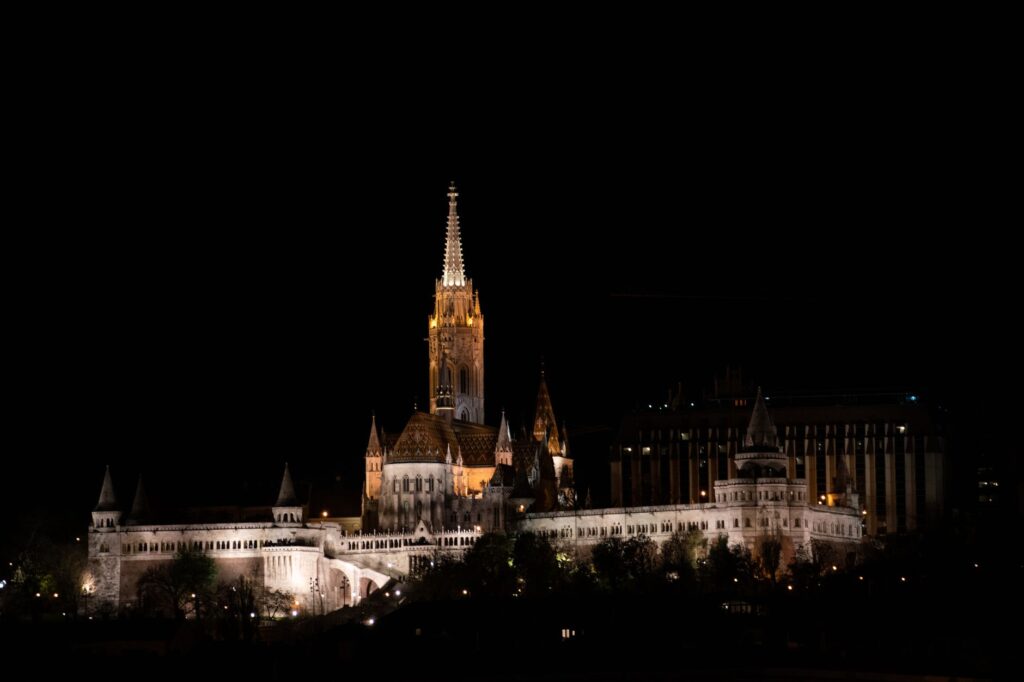
What Makes Buda Castle District Different From the Rest of Budapest
Buda Castle District, known locally as Várnegyed and administratively District I, has been a UNESCO World Heritage Site since 1987, listed together with the Danube banks and Andrássy Avenue. That listing is not decorative. It means most of the building stock inside the castle walls is under some form of heritage protection, and it means the district will never see the kind of new construction or large-scale conversion that keeps supply flowing in districts like IX or XIII.
The residential stock is small. Much of the district is taken up by museums, government buildings, embassies and the castle complex itself, so the number of actual apartments is limited compared to almost any other central district. Street level in the tourist core is dominated by souvenir shops, museums and restaurants aimed at day visitors, not grocery stores or the everyday services a resident needs. Car access is restricted in parts of the district and resident parking permits work differently street by street, which matters more here than buyers expect until they try to move in.
Property Prices in District I vs Other Districts
Prices in the Castle District typically run above the Budapest average per square meter, and above most of the other traditionally premium districts too, because so few units ever come up for sale. The ranges below are indicative and move with the market, so confirm current asking prices with a local agent before you anchor a decision to any figure you read online.
| District | Character | Renovated, EUR per sqm (approx.) | Needs renovation, EUR per sqm (approx.) |
|---|---|---|---|
| District I – Castle Quarter (Várnegyed) | Heritage protected, low supply, prestige and views | 4,000 – 7,000+ | 2,800 – 4,500 |
| District V – Belváros / Lipótváros | Inner city, high liquidity, mixed old and renovated stock | 3,500 – 6,000 | 2,500 – 4,000 |
| District VI – Terézváros | Andrássy Avenue area, strong rental demand | 3,000 – 5,000 | 2,000 – 3,500 |
| District VII – Erzsébetváros (Jewish Quarter) | Party district, historically the strongest short-term rental yields | 2,700 – 4,500 | 1,800 – 3,200 |
Treat these as a starting point for a conversation, not a quote. A single sale of a Danube-view apartment in District I can shift the average for the whole district, because so few units trade in a given year.
Who Actually Buys Here: The Investor Profile That Works
Two types of buyer do well in the Castle District. The first wants a pied-à-terre with a view of the Danube or the Parliament building and cares more about owning a piece of a UNESCO site than about squeezing out a rental return. The second is a wealth preservation buyer who treats the apartment the way they might treat a small allocation to gold: illiquid, slow moving, unlikely to lose value over a long horizon, not expected to produce monthly cash flow.
Buyers who need the property to pay for itself through rental income are usually better served elsewhere. If yield is the priority, the numbers generally work harder in District VI, VII or VIII, where entry prices are lower and rental demand from both tenants and short-term guests is stronger. Our guide to why investors buy in Budapest breaks down which districts suit which strategy in more detail.
The Short-Term Rental Question
Short-term letting rules in Budapest have tightened over the past few years and they vary by district and, on top of that, by building. Even where the district technically permits short-term letting, an individual building's own house rules (társasházi SZMSZ) can prohibit it outright, and that prohibition binds every owner regardless of what the city allows. In a UNESCO-protected district like I, expect scrutiny on this point to be higher, not lower.
Do not assume Airbnb income is available just because a listing agent mentions it. Confirm the current rule directly with the District I local government office and get the specific building's house rules in writing before you calculate a return based on nightly rates. This single check has saved more than one buyer from a purchase that only worked on paper.
Renovation and Heritage Protection: What You Can and Cannot Change
Buildings and individual apartments inside the Castle District can carry different levels of protection. Some protect only the facade, others extend to windows, staircases or original interior features. Anything falling under monument protection (müemlékvédelem) generally requires approval from the heritage authority before you touch it, and that approval process adds weeks to months to any renovation timeline.
In practice this means you cannot simply swap old wooden windows for cheap uPVC to save on heating costs, you often cannot resize a bathroom that intrudes on an original layout, and even paint colours on visible facades can be dictated by the authority rather than by you. Budget a genuine contingency, both in time and money, of somewhere around 10 to 20 percent on top of a standard renovation quote if the unit sits inside a protected building. Get this confirmed in writing from a local architect familiar with heritage cases before you commit, not after.
Liquidity: How Long It Takes to Buy and Sell
Fewer transactions happen in District I in a given year than in District V or VII, simply because there is less stock to trade. Fewer transactions means fewer recent comparable sales, which makes pricing an apartment here harder for both buyer and seller, and it generally means a longer time on market when you eventually sell. Where a well-priced apartment in the inner city districts might sell in weeks, a Castle District unit priced even slightly ambitiously can sit for months waiting for the right buyer to appear.
This is not a reason to avoid the district. It is a reason to go in expecting to hold for the medium to long term rather than to flip.
Castle District vs Inner City and the Jewish Quarter for Investment
If your priority is rental yield and liquidity, District V and District VII generally beat District I on both counts. If your priority is scarcity, prestige, and a property that is genuinely hard to replicate anywhere else in the city, the Castle District wins, and it is one of the few parts of Budapest where that scarcity is protected by law rather than by market conditions alone. Neither answer is universally correct. It depends on whether you are buying an income-producing asset or a long-term store of value with a view attached.
You can browse current stock across both strategies on our full list of Budapest properties for sale, filtered by district, to see how pricing actually compares right now rather than from a table.
The most expensive mistake buyers make here: buying a Castle District apartment on the assumption it can run as a short-term rental, without confirming the current district rules or the specific building's house rules first. Buyers who skip this step sometimes discover after closing that no licence is available, or that the building has already banned it, leaving them holding a property whose return only works as a long-term rental or personal residence, at a fraction of the yield they underwrote.
What to Ask Before You Buy in Buda Castle District
- Is the building, or this specific unit, under monument protection, and does that protection cover the facade only or the interior as well?
- What do the building's house rules say about short-term rental, in writing, not from the selling agent's summary?
- Has the District I local government's current position on short-term letting licences been confirmed for this address in the last few months?
- Is a resident parking permit available for this street, and what does it currently cost and involve?
- Has a heritage-aware technical survey been done, separate from a standard structural survey, covering windows, roof and any protected interior elements?
- What was the last comparable sale on this street or in this building, and how long ago did it close?
Our team at Buy Budapest Apartments works through this checklist with every foreign buyer looking at District I, because the paperwork here differs from a standard apartment sale elsewhere in the city. If you want to talk through a specific listing before you commit, reach out through our contact page and we can walk you through what applies to that exact building.
FAQ
Is Buda Castle District a UNESCO World Heritage Site?
Yes. Buda Castle District, together with the banks of the Danube and Andrássy Avenue, has been listed as a UNESCO World Heritage Site since 1987. This means most buildings within the district carry some form of heritage protection, which affects what renovations owners can carry out and how quickly changes can be approved.
Can foreigners buy property in Buda Castle District?
Yes, foreign nationals can buy residential property in District I under the same general rules that apply across Hungary, though non-EU buyers typically need a permit from the local government office, which is usually granted as a formality for standard residential purchases. Confirm the current process for your nationality with a local agent or lawyer before making an offer.
Is Airbnb allowed in Buda Castle District Budapest?
It depends on the specific building and on current district rules, both of which have tightened in recent years across Budapest. Even where the district technically permits short-term letting, an individual building's own house rules can ban it outright. Always confirm the current rule directly with the District I local government office and the building's house rules before assuming rental income is possible.
What is the average price per square meter in District I Budapest?
Renovated apartments in District I typically run somewhere between roughly 4,000 and 7,000 euros per square meter or higher for prime Danube-view units, while units needing renovation are generally lower. These figures move with the market and with the small number of sales that happen each year, so confirm current pricing with a local agent rather than relying on a fixed number.
Is District I Budapest good for rental income?
Generally not as good as District V, VI or VII. District I has tighter short-term rental rules, a smaller pool of long-term tenants due to limited everyday amenities, and higher entry prices, which together tend to produce lower yields than the more central, tenant-dense districts. It suits capital preservation and lifestyle buyers better than pure income investors.
How hard is it to renovate an apartment in the Castle District?
Harder and slower than in a non-protected building. Anything covered by monument protection, which can include facades, windows, staircases or original interior features depending on the building, needs approval from the heritage authority before work starts. Budget extra time, often weeks to months for approvals, and a cost contingency of roughly 10 to 20 percent above a standard renovation quote.
Is Buda Castle District touristy to live in?
Yes, particularly in the historic core, where day visitors, museums and tour groups dominate street life and most ground-floor businesses cater to tourists rather than residents. It quiets down significantly in the evening once tour groups leave. Buyers wanting an everyday neighbourhood feel with local shops and cafes nearby often prefer District II or parts of District XII instead.
What is the difference between Buda Castle District and Budapest's Inner City for investment?
District I offers scarcity, heritage status and prestige but lower liquidity, stricter renovation rules and generally lower rental yield. The Inner City, District V, offers a larger pool of comparable sales, stronger rental demand and faster resale, at the cost of the specific scarcity value that comes with owning inside a protected castle district. The right choice depends on whether the goal is income or long-term capital preservation.