



Best Budapest Districts to Buy an Apartment in 2025
The best Budapest districts to buy an apartment in 2025 depend on your goal. District V and VI offer the highest rental demand and prestige but command premium prices. Districts VII, VIII, and IX give better value with strong yields. Districts II and XII suit owner-occupiers wanting quiet, green surroundings. District XIII is the top pick for new-build buyers seeking modern amenities at mid-range prices.
How Budapest districts are organised
Budapest is divided into 23 numbered districts (kerületek), arranged in a rough spiral from the historic centre outward. Odd-numbered districts generally sit on the Buda (west) side of the Danube; even-numbered districts are mostly on the Pest (east) side, though there are exceptions. The Roman numeral system dates back to the 19th century and is still used on every property deed, utility bill, and address today.
For buyers, the district number is the single most important piece of context. It determines property tax rates, building regulations, proximity to metro lines, and the character of the street. A flat in District V and a flat in District XV can be the same size and age yet differ dramatically in price, tenant profile, and long-term capital growth potential. Understanding the districts before you browse listings is not optional — it is the foundation of any sensible purchase decision.
The districts most relevant to foreign buyers and investors in 2025 are V, VI, VII, VIII, IX, XI, XII, XIII, and II. This guide covers the ones that generate the most buyer enquiries and where the market data is clearest.
District V – The Inner City
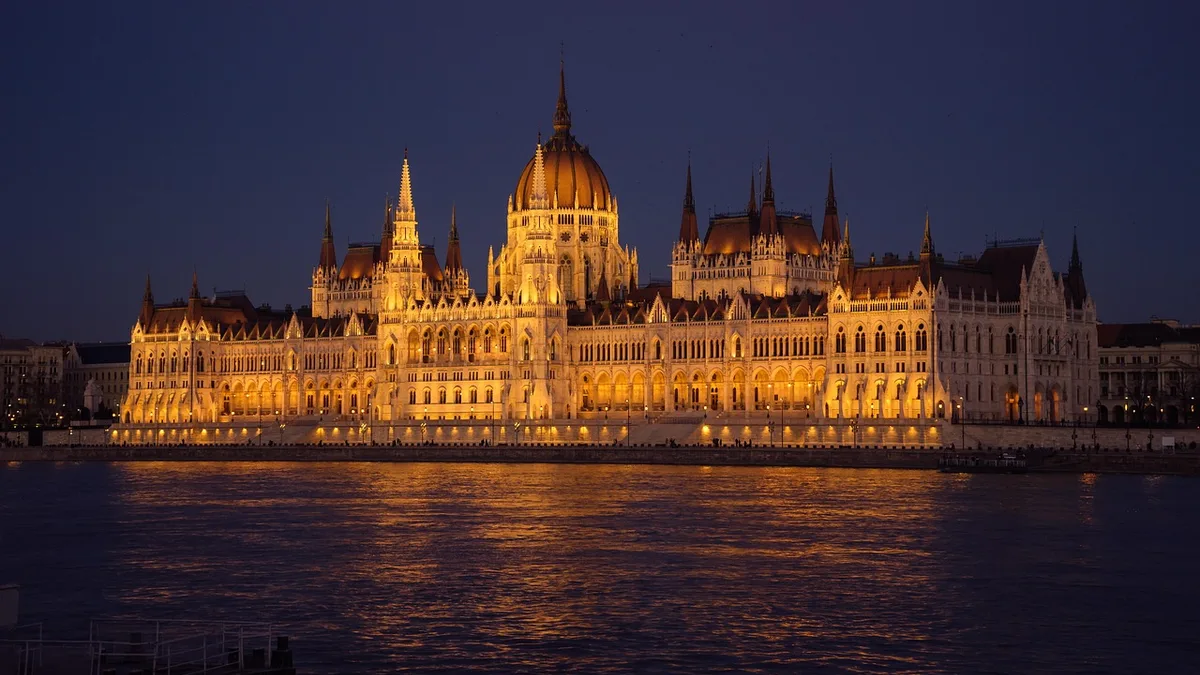
District V (Belváros-Lipótváros) is the prestige address on the Pest side. It contains the Hungarian Parliament, the Basilica of St Stephen, Váci Street, and the Danube promenade. Apartments here are predominantly in 19th-century or early 20th-century buildings, many of them listed or protected. A renovated 60 m² flat on Október 6 utca or near Szabadság tér typically asks between €4,500 and €6,500 per square metre in 2025, making it the most expensive residential district in the country.
Short-term rental demand in District V is exceptionally strong. The area draws business travellers, diplomats, and high-spending tourists year-round. However, Budapest’s local government has introduced restrictions on new short-term rental licences in the inner districts, so buyers targeting Airbnb-style income should verify the current licensing position before committing. Long-term rental yields in District V tend to run slightly lower than in Districts VII or VIII precisely because purchase prices are so high — gross yields of around 4–5% are typical for a well-located flat.
District V suits buyers who prioritise capital preservation, prestige, and liquidity. If you ever need to sell, a well-maintained flat in this district finds buyers faster than almost anywhere else in Hungary. It is less suited to buyers on a tighter budget or those chasing maximum rental income relative to purchase price.
Districts VI and VII – Terézváros and Erzsébetváros
Districts VI and VII sit immediately north and east of District V and together form the heart of Budapest’s cultural and nightlife scene. District VI contains Andrássy Avenue — a UNESCO World Heritage boulevard lined with embassies, luxury boutiques, and the Hungarian State Opera House. District VII is the historic Jewish Quarter, home to the Great Synagogue on Dohány Street and the famous ruin-bar district around Kazinczy Street.
Both districts have seen sustained renovation activity over the past decade. A two-bedroom flat on or near Andrássy Avenue in District VI can ask €5,000–€7,000 per m² for a fully renovated unit. In District VII, prices are somewhat lower — typically €3,500–€5,500 per m² for renovated stock — which is why it remains one of the most popular districts for buy-to-let investors. Gross rental yields of 5–6.5% are achievable on a well-managed long-term tenancy, and the tenant pool is deep: young professionals, expats, and university students all compete for flats here.
One practical consideration: District VII’s nightlife concentration means noise can be a real issue on streets like Király utca or Rumbach Sebestyén utca. Buyers should visit the specific street at night before purchasing, not just during a daytime viewing. Flats on quieter side streets or in inner courtyards (udvari lakás) command a premium for good reason. For a broader look at what is currently available in these areas, the Budapest property listings page filters by district.
District XIII – The new-build hotspot
District XIII (Angyalföld and Újlipótváros) has transformed more visibly than any other Budapest district over the past ten years. The southern part — Újlipótváros, around Pozsonyi Road and Szent István Park — has always been popular with middle-class families and has a distinctly residential, leafy character. The northern part, around Váci Road and the Duna-part (Danube bank), has become the city’s primary new-build corridor, with dozens of large residential developments completed or under construction since 2015.
New-build apartments in District XIII typically range from €3,200 to €4,800 per m² depending on the developer, floor, and specification. That is meaningfully cheaper than comparable new stock in District V or VI, yet the metro line M3 (recently fully renovated) and tram line 1 give excellent access to the centre. The district also has good schools, supermarkets, and green spaces along the Danube, making it attractive to families relocating to Budapest as well as investors.
Rental yields in District XIII on new-build stock tend to sit in the 4.5–6% gross range. The tenant base is broad — young professionals, expat families, and corporate tenants from the nearby office parks on Váci Road. For buyers interested in a managed investment approach, the 8% rental yield property management service is worth reviewing to understand what active management can add to returns in this district.
Districts II and XII – The Buda hills
Districts II and XII cover the hilly, green western side of Budapest. Neighbourhoods like Rózsadomb (Rose Hill) in District II and Svábhegy or Orbánhegy in District XII are where Budapest’s wealthiest residents have traditionally lived. Detached villas, semi-detached houses, and low-rise apartment buildings sit among mature trees, with views over the city. The air quality is noticeably better than in the flat Pest districts, and the pace is quieter.
Prices in the premium parts of District II — particularly Rózsadomb — can exceed €5,000 per m² for a well-positioned villa or penthouse apartment. More typical residential streets in Districts II and XII offer apartments in the €3,000–€4,500 per m² range. These districts are primarily owner-occupier territory. Rental yields are lower than in the inner Pest districts because purchase prices are high and the tenant pool for long-term lets is narrower. Short-term rental is less viable here due to the distance from tourist attractions.
The main transport consideration is that neither district has a metro line. Residents rely on buses, trams, and the cogwheel railway (fogaskerekű) for District XII. Journey times to the city centre are manageable but longer than from Pest-side districts. Buyers who work from home or have a car will find this less of an issue than daily commuters. For those weighing up the broader case for owning property in Budapest, the why invest in Budapest page sets out the structural factors that apply across all districts.

Districts VIII and IX – Value and regeneration
Districts VIII (Józsefváros) and IX (Ferencváros) have been the subject of sustained urban regeneration since the mid-2000s. District IX in particular — especially the Ferencváros neighbourhood around Ráday Street and the Corvin quarter — has largely completed its transformation. The area now has a strong café culture, good transport links (metro M3 and M4 intersect at Kálvin tér, on the border of Districts V and IX), and a growing number of renovated period buildings.
Per-square-metre prices in District IX for renovated flats typically range from €2,800 to €4,200, making it one of the better-value inner districts. Gross rental yields of 5.5–7% are achievable, particularly on smaller one- and two-bedroom flats popular with young professionals and students from the nearby Semmelweis University medical campus. District VIII is more varied: the streets immediately around Corvin köz and Kálvin tér are well-established, while parts further east are still in earlier stages of regeneration and carry more uncertainty.
For buyers willing to accept some renovation risk in exchange for lower entry prices, Districts VIII and IX offer the most interesting value proposition among the inner districts in 2025. The Renovate and Resell service is specifically designed for buyers who want to buy below market, refurbish, and either sell or hold for yield. Both districts have a track record of supporting this strategy when the right property is selected.
District IX’s Ferencváros has completed one of the most successful urban regeneration programmes of any Central European inner-city neighbourhood, with the Corvin quarter redevelopment anchoring a broader improvement in the surrounding streets.
Price and yield comparison table
The figures below are indicative ranges based on market conditions in early 2025 for renovated residential apartments. New-build prices, unrenovated stock, and premium penthouses will fall outside these ranges. Gross rental yield is calculated on long-term tenancy; short-term rental can produce higher gross figures but involves higher operating costs and regulatory risk.
What to check before you buy
Choosing the right district is only the first step. Once you have a shortlist of areas, the due diligence on individual properties matters just as much. In Hungary, property transactions are governed by the Civil Code and require a licensed Hungarian lawyer (ügyvéd) to countersign the sale and purchase agreement. The lawyer checks the land registry (ingatlan-nyilvántartás) for encumbrances, mortgages, and any third-party rights before the contract is signed.
Foreign nationals from outside the European Union need a permit from the local government office (járási hivatal) to purchase residential property in Hungary, though this is a largely administrative process and is rarely refused for genuine residential or investment purchases. EU citizens buy on the same terms as Hungarian nationals. If you are considering holding the property through a Hungarian company for tax efficiency, the Hungarian company setup for property service explains the structure and its implications.
Beyond the legal checks, buyers should assess the building’s common areas and the condominium association (társasház) finances. Older buildings in Districts V, VI, and VII often have deferred maintenance costs that are eventually passed to flat owners as special levies. Ask for the last two years of társasház meeting minutes and the current reserve fund balance before signing anything. For a structured walkthrough of the full purchase process, the safe property purchase legal service covers each stage from offer to title transfer.
Finally, think about your exit before you enter. The most liquid Budapest districts — V, VI, VII, and XIII — have the deepest pool of both local and foreign buyers, which means you can sell more quickly if your circumstances change. Less central districts may offer better yields but can take longer to sell, particularly in a softer market. Browsing current properties for sale in Budapest across districts gives a practical sense of what is available at different price points right now.
Frequently asked questions
- Which Budapest district has the highest rental yield in 2025?
- Districts VIII and IX consistently produce the highest gross rental yields among the inner districts, typically in the 5.5–7% range for renovated flats on long-term tenancies. District VII also performs strongly at 5–6.5%. These figures are gross; net yields after management fees, taxes, and maintenance will be lower.
- Can foreigners buy apartments in any Budapest district?
- EU citizens can buy residential property in any Budapest district on the same terms as Hungarian nationals. Non-EU nationals require a permit from the local government office (járási hivatal), but this is a standard administrative step and is not district-specific. Agricultural land has separate, stricter rules that do not apply to urban apartments.
- Is District XIII a good investment for 2025?
- District XIII is widely regarded as one of the stronger investment districts for new-build apartments in 2025. The fully renovated M3 metro line, the Váci Road office corridor, and a broad tenant base of young professionals and expat families support consistent rental demand. Entry prices are lower than in Districts V or VI, which helps yield calculations.
- What is the cheapest Budapest district to buy an apartment?
- The lowest per-square-metre prices for habitable apartments in 2025 are generally found in Districts X, XV, XVI, XVII, and XX — the outer Pest districts. However, rental demand and liquidity are also lower there. Among the inner districts, Districts VIII and IX offer the most competitive prices relative to their location and transport links.
- Do I need a Hungarian lawyer to buy property in Budapest?
- Yes. Hungarian law requires a licensed Hungarian lawyer (ügyvéd) to countersign any residential sale and purchase agreement for it to be legally valid and registrable in the land registry. The buyer typically pays the lawyer’s fee, which is usually around 0.5–1% of the purchase price. Using the same lawyer as the seller is not recommended.
- How long does a Budapest apartment purchase take to complete?
- A straightforward resale purchase in Budapest typically takes four to eight weeks from signed contract to land registry registration, assuming no mortgage is involved. New-build off-plan purchases can take considerably longer depending on the construction timeline. Land registry registration itself can take several weeks after the notarised documents are submitted.
- Are there restrictions on short-term rentals in Budapest’s inner districts?
- Budapest’s inner districts, particularly District V, have introduced restrictions on new short-term rental licences in recent years. The rules are set at the district level and can change. Buyers planning to operate a short-term rental should verify the current licensing requirements with the relevant district office and their lawyer before purchasing.
Sources
- Hungarian Central Statistical Office (KSH) – Housing statistics
- Magyar Nemzeti Bank – Housing Market Report
- Global Property Guide – Hungary
- Budapest City Government – Official portal
See also: Is District V Budapest a Good Area to Buy an Apartment?.