


District XII Budapest (Hegyvidék): Is It Worth Buying?
Direct answer: District XII, known as Hegyvidék, is one of the better areas in Budapest to buy if your priority is a quiet, green, family-oriented home rather than rental yield or proximity to nightlife. It sits in the Buda Hills, carries some of the highest prices per square metre in the city, has weaker public transport in its upper pockets, and attracts almost no short-term tourist demand. It suits long-term owner-occupiers and families more than investors chasing Airbnb income.
Table of contents
- Where District XII is and what it covers
- The housing stock: villas, panel blocks and new builds
- District XII property prices per square metre
- Who buys and rents in Hegyvidék
- Transport and getting around
- Amenities and daily life
- Best pockets to buy, and ones to think twice about
- Risks and honest downsides
- Is District XII a good place to buy? The verdict
- FAQ
Where District XII is and what it covers
District XII is one of the largest districts in Budapest by land area but one of the lowest by population density, because much of it is forest, parkland and detached housing rather than apartment blocks. It sits in the Buda Hills, bordering District I (the Castle District side) to the north, District XI (Újbuda) to the south, and District II along its northwest edge. Locals call the whole district Hegyvidék, which simply means "hill region."
Inside the district, people talk in neighbourhood names more than street grids: Németvölgy and the area around MOM Park, Svábhegy and Istenhegy higher up the slope, Zugliget and Normafa further out where it turns semi-rural, Farkasrét near the old cemetery, and Széchenyi-hegy at the top of the cogwheel railway line. Each of these has a different character, different transport reality and a different price band, so "District XII" as a single label hides a lot of variation.
The housing stock: villas, panel blocks and new builds
This is not a district of uniform prewar apartment buildings like the inner Pest districts. The housing stock splits into three distinct categories:
- Detached villas and family houses, many built between the 1900s and 1940s, some rebuilt or extended since. These dominate the upper hill areas: Istenhegy, Svábhegy, parts of Zugliget. Plots vary widely, gardens are common, and many need serious renovation if untouched since the communist era.
- Mid-rise apartment buildings, both prewar and postwar, concentrated around Németvölgyi út, Böszörményi út and the flatter streets near MOM Park. Flat sizes here run roughly from 50 to 110 square metres, lifts are inconsistent in older buildings, and condition ranges from untouched original to fully renovated.
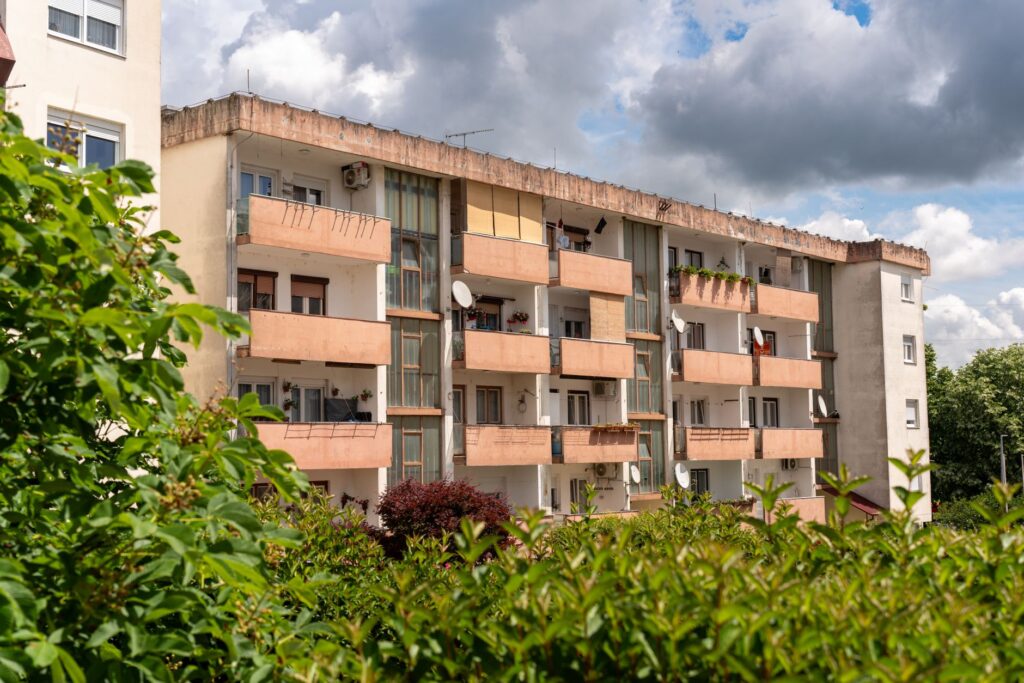
- Panel blocks and newer developments, smaller in number than in outer districts, mostly from the 1970s-80s in pockets like Farkasrét, plus a handful of newer apartment developments built in the last decade that target exactly the buyer who wants Buda Hills address without villa-level maintenance.
Courtyards and shared gardens are more common here than balconies-over-street, which is part of the appeal for families. Lift presence should always be confirmed building by building rather than assumed, especially in four and five storey prewar blocks.
District XII property prices per square metre
District XII is consistently one of the more expensive residential districts in Budapest, comparable to or above District II, and well above the Budapest average. The figures below are indicative only, based on general market positioning rather than a specific dataset, and should always be checked against current listings before you use them to make an offer.
| Area type | Indicative price per sqm | How it compares to Budapest average |
|---|---|---|
| Renovated flat near MOM Park / Németvölgy | Upper-middle to high end of the Budapest range | Above average |
| Unrenovated prewar flat, mid-hill | Middle of the Budapest range | Roughly average to slightly above |
| Villa or house, Svábhegy / Istenhegy | High end of the Budapest range, wide spread by plot and condition | Well above average |
| Panel block flat, Farkasrét | Below district average, closer to Budapest average | Around average |
| Newer development apartment | High end, premium for new build | Above average |
Rents follow a similar pattern: long-term rental demand is steady but yields tend to run lower than in central Pest districts, because purchase prices are high relative to achievable rent. If yield is your main goal rather than long-term value and lifestyle, it is worth comparing District XII against the options covered in our Budapest property guides before committing capital here.
Who buys and rents in Hegyvidék
The buyer profile in District XII is heavily weighted toward families, both Hungarian and foreign, who want a quieter, greener home within reasonable reach of the centre, plus retirees and professionals who have outgrown an inner-city flat. International schools near the Buda side pull in a steady stream of expat families specifically looking in this district and District II.
Rental demand exists but it is a different market than you find in the inner districts. Tenants here are mostly long-term: families, diplomats, corporate relocations, and some students attached to nearby schools. Short-term, tourist-style rental demand is low, because there is little reason for a tourist to stay here instead of somewhere walkable to the Danube and the Castle District. Budapest has also been tightening short-term rental rules district by district in recent years, so anyone counting on Airbnb income from a District XII flat should confirm current local regulations before buying, not after.
Transport and getting around
This is the honest weak point of the district. There is no metro line running through District XII itself. The nearest metro access is at Déli pályaudvar and Széll Kálmán tér, both just over the district border, reachable from the flatter parts of District XII by tram or a short bus ride. Tram lines 59 and 61 run along the main Böszörményi út and Alkotás utca corridor, and several bus routes connect the hill neighbourhoods down to these interchange points.
For the upper hill areas, Svábhegy, Normafa, Széchenyi-hegy, the historic cogwheel railway (fogaskerekű vasút) is a genuinely useful commuter link down to Városmajor, where it connects to the tram network. But the higher and further into the hills you go, the more a car becomes practical rather than optional, especially in winter when steep side streets can be slow to clear. This single factor is the one most buyers underestimate before they commit to a villa purchase up the hill.
Amenities and daily life
MOM Park is the anchor amenity for the district: a shopping and cultural complex with cafes, a cinema, shops and offices, and it has pulled a lot of everyday life toward the Németvölgy end of the district. Away from MOM Park, daily life is quieter: small grocers, local bakeries, and a lot of green space. Normafa and the surrounding forest paths are a genuine draw, used year round by locals for walking, running and, in winter, sledding.
Schools are a strong point. Several well-regarded Hungarian and international schools sit in or near the district, which is part of why family buyers target it specifically. What you will not find much of is nightlife, late-opening restaurants, or the kind of dense retail strip you get in central Pest.
Best pockets to buy, and ones to think twice about
For a balance of transport, amenities and resale liquidity, the Németvölgy area around MOM Park and the flatter stretches of Böszörményi út and Csörsz utca are the easiest to recommend. You get reasonable tram access, shops within walking distance, and apartment buildings that are easier to compare against each other because there are more of them.
Svábhegy and Istenhegy offer the view, the greenery and the villa lifestyle, but buyers should go in with eyes open about car dependency and the cost of renovating an older detached house. Farkasrét is more affordable within the district and worth a look if budget matters more than prestige address, though some buyers find the proximity to the cemetery a psychological rather than practical downside.
Areas furthest up toward Széchenyi-hegy and the deeper parts of Zugliget are closer to rural living than city living. Beautiful, but only right for someone who genuinely wants that, not someone who assumes it will feel like a normal Budapest neighbourhood with better air.
Risks and honest downsides
District XII has none of the flood zone concerns that affect some flatter districts near the Danube, since it sits well above river level. The real risks here are different in kind.
- Transport dependency in the upper hills: fewer bus routes, longer waits, and genuine car dependency the higher you buy.
- Renovation cost on older villas: many prewar houses have not been touched structurally in decades, and full renovation budgets can run well beyond what the purchase price suggests.
- Heating type varies by building: individual gas heating is common in houses, while some apartment blocks still run on older communal systems. This affects monthly running costs significantly and should be checked before purchase, not assumed.
- Lower rental yield relative to price: high purchase prices combined with a long-term-only rental market mean yields typically sit below what you would see in central Pest.
- Weak liquidity for unusual properties: a large villa on a steep plot with no transport access is a much harder resale than a standard flat near MOM Park.
The most expensive mistake buyers make in District XII: falling for the view and the greenery of a hillside villa without checking winter road access, distance to the nearest tram or bus stop, and the real cost of the renovation it needs. The purchase price can look reasonable next to a central Pest flat, but by the time you add structural work and accept that you will need a car for daily life, the total cost of ownership is often higher than buyers expect, and resale is slower because the pool of buyers willing to accept those trade-offs is smaller.
Is District XII a good place to buy? The verdict
Yes, with a clear condition: District XII is a good buy for someone who wants to live there long term, values green space, quiet and family-friendly surroundings over walkability and nightlife, and is not trying to maximise rental yield. It is a weaker choice for an investor focused purely on rental return or short-term letting income, because prices are high relative to achievable rent and the short-term rental market here is thin.
If you are comparing District XII against other areas purely as an investment decision, it is worth reading our broader overview of why to invest in Budapest before narrowing to a specific district, and browsing current listings across Budapest to see how District XII pricing sits against the rest of the market right now. If District XII fits your purpose, our team can walk you through live options via our contact page.
FAQ
Is District XII Budapest expensive?
Yes. District XII, Hegyvidék, is consistently among the more expensive residential districts in Budapest, generally in line with or above District II, and above the citywide average per square metre. Villas and renovated flats near MOM Park sit at the high end, while panel block flats in Farkasrét are closer to the Budapest average. Always check current listings rather than relying on citywide averages, since the spread within the district is wide.
What is District XII Budapest known for?
District XII, known locally as Hegyvidék, is known for being the green, hilly, villa district of Buda. It includes Normafa forest park, MOM Park shopping and cultural complex, and residential neighbourhoods like Svábhegy, Istenhegy and Németvölgy. It is considered a family-friendly, quiet area rather than a tourist or nightlife area, and it attracts long-term residents more than short-term visitors.
Is Hegyvidék a good place to live?
For families and people who want a quiet, green, low-density home within reach of the city centre, yes. For people who want to walk to restaurants, bars and transit at all hours, it is a weaker fit, particularly in the upper hill areas where car dependency is real. It suits long-term living more than a short city-break lifestyle.
Can foreigners buy property in District XII Budapest?
Yes. Foreign buyers can purchase residential property in District XII under the same general rules that apply across Hungary, which typically involve a permit process handled alongside the purchase contract. The process does not differ by district. For the full purchase process and documentation steps, see our Budapest real estate agency guidance before making an offer.
What is the average price per square metre in District XII?
There is no single reliable average, because the district spans everything from panel flats in Farkasrét to high-end villas in Svábhegy. As a general rule, District XII prices sit above the Budapest average across most of its pockets, with the premium highest near MOM Park and in the detached villa areas. Treat any single average figure for the whole district as a rough guide only, and check current listings for the specific pocket you are considering.
Is District XII good for renting out to tourists?
Not really. District XII has very little short-term tourist demand compared with the inner Pest districts, because it is not walkable to the main sights and nightlife. Budapest has also been tightening short-term rental regulations district by district, so rules can differ by area and change over time. Anyone planning to rely on Airbnb-style income here should confirm current local rules before buying, since the long-term rental market is the realistic income source in this district.
How do you get from District XII to the city centre?
From the flatter parts of the district, trams 59 and 61 and several bus routes connect to Széll Kálmán tér and Déli pályaudvar, both of which have metro access into the centre. From the upper hill neighbourhoods, the historic cogwheel railway connects down to Városmajor for tram access, though many residents in the highest areas rely on a car for daily commuting, particularly in winter.
Is District XII in a flood zone?
No. District XII sits in the Buda Hills well above the Danube, so it does not carry the flood zone risk that affects some low-lying districts closer to the river. The risks specific to District XII are different in nature, mainly around transport access in the upper hills and renovation cost on older villa stock rather than water risk.