


Is District XIII Budapest a Good Area to Buy an Apartment?
District XIII is one of Budapest's more split-personality districts, and that split matters more than almost anything else when you're deciding whether to buy here. The southern half, Újlipótváros, is a dense grid of 1930s Bauhaus apartment buildings a ten-minute walk from the Danube and the city center, popular with young professionals and expats. The northern half, Angyalföld, is a former industrial and working-class area now mixing socialist-era panel blocks with new riverside towers. Prices, tenants and risks differ sharply between the two, so "District XIII Budapest" is really two markets wearing one postal code.
Table of contents
- Where is District XIII and what are its boundaries
- Housing stock: Bauhaus flats, panel blocks and new towers
- Property prices per square meter in District XIII
- Rental demand and yields
- Who buys and rents here
- Transport and amenities
- Pros, cons and risks
- Best streets and ones to avoid
- The verdict
- FAQ
Where is District XIII and what are its boundaries
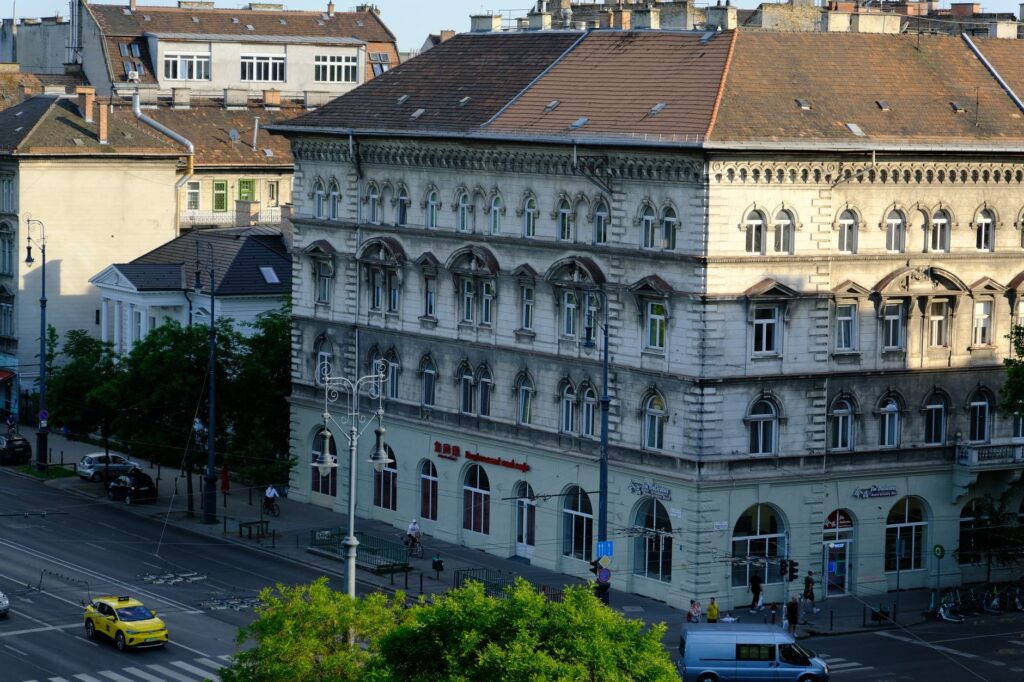
District XIII sits on the Pest side, wrapped around a bend of the Danube just north of the city center. Its southern edge, Szent István körút and Jászai Mari tér, touches District V (the historic center) right at Margit Bridge, so Újlipótváros is genuinely walkable to downtown Pest and across the river to Buda. From there the district runs north through Angyalföld along Váci út to the border with District IV (Újpest), with District VI (Terézváros) and District XIV (Zugló) to the east.
Újlipótváros is the compact southern pocket: Pozsonyi út, Hollán Ernő utca, Victor Hugo utca and the streets around Szent István Park. Angyalföld is everything north of roughly Dózsa György út, including the Vizafogó neighborhood near the Danube and the Váci út office corridor further inland. Buyers searching "District XIII Budapest" are very often actually looking for Újlipótváros specifically, since that's the part that shows up on every expat and investor shortlist.
Housing stock: Bauhaus flats, panel blocks and new towers
Three distinct building types make up the district, and each comes with its own maintenance profile.
Újlipótváros Bauhaus and art deco buildings. Built mostly in the 1930s, these are three to six story apartment blocks arranged around internal courtyards, a style locals sometimes call "Bauhaus Budapest." Original flats run from compact one-bedrooms around 35 to 50 square meters up to generous three- and four-room apartments of 90 to 130 square meters, often with high ceilings, parquet floors and large windows. Many buildings never had lifts installed, or got a small lift retrofitted decades later that barely fits a shopping trolley. Check this before committing if stairs are an issue for you or your future tenants.
Angyalföld panel blocks. Socialist-era prefabricated panel buildings (panelház) from the 1960s to 1980s dominate much of Angyalföld and Vizafogó. Flats are smaller and more standardized, typically 40 to 65 square meters, with district heating and lifts as standard. These are cheaper to buy and cheaper to maintain structurally, but they rarely have the charm or the resale premium of a renovated Újlipótváros flat.
New-build riverside towers. Along the Danube in Vizafogó and parts of Angyalföld, newer developments have gone up over the last 10 to 15 years offering lifts, underground parking, river views and modern insulation. These command the highest prices in the district and attract a different buyer entirely: someone who wants new-build convenience over period character. For a sense of how District XIII fits against other parts of the city, our why to invest in Budapest guide covers the citywide picture before you narrow down to a district.
Property prices per square meter in District XIII
Prices below are indicative ranges to orient your search. They move with the listing and the building's condition, so always confirm against current inventory before making an offer.
| Area | Typical building age | Indicative HUF/sqm (renovated) | How it compares to Budapest average |
|---|---|---|---|
| Újlipótváros, core streets | 1930s Bauhaus | 1,000,000 to 1,400,000 | Above average, close to District V and VI levels |
| Angyalföld, Vizafogó panel stock | 1960s to 1980s | 700,000 to 950,000 | Below average, one of the more affordable inner-city options |
| Angyalföld, new riverside towers | 2010s to present | 1,100,000 to 1,500,000+ | Above average, priced close to premium new-build elsewhere |
| Budapest overall average (reference) | Mixed | varies, check current data | Baseline for comparison |
Unrenovated flats in Újlipótváros can trade well below the renovated figures above, which is where a lot of the value plays in this district happen, provided you budget properly for the renovation and understand the building's shared costs. Browse live examples on our apartments for sale page to see how current asking prices compare to these ranges.
Rental demand and yields
Újlipótváros has some of the steadiest long-term rental demand in Budapest outside the historic center, driven by young professionals, couples and a meaningful expat population who want proximity to downtown without paying District V prices. Short-term and medium-term rental demand is also strong here because of the location and the Danube-adjacent streets, but short-term rental regulation in Budapest has tightened over recent years and rules vary by building and district decision, so confirm the current short-term licensing situation for any specific address before buying with Airbnb income in your plan.
Angyalföld's panel stock rents mainly to local tenants, students and families on tighter budgets, with lower rents to match the lower purchase price. The new riverside towers sit in between: good for corporate tenants and relocating professionals who want modern finishes, but yields there are compressed by the higher purchase price per square meter.
Who buys and rents here
Újlipótváros attracts a mix of local young professionals, Budapest-based expats, and foreign buyers looking for a flat they could live in part-time and rent out the rest of the year. It's one of the more "normal neighborhood" choices for foreign buyers who want walkability and a real local feel rather than a tourist-district address. Angyalföld, outside its new riverside pocket, is bought mostly by locals and investors chasing a lower entry price and steady long-term tenants rather than short-term yield.
Transport and amenities
The M3 metro line runs through the district with stops including Lehel tér, Dózsa György út and further north into Angyalföld, giving a direct line into the center and out to the northern suburbs. The number 4 and 6 trams, Budapest's busy ring tram route, skirt the southern edge of Újlipótváros at Jászai Mari tér, and several bus routes cross the district connecting to Buda via Margit Bridge. Everyday amenities are strong: Lehel Market Hall, Duna Plaza shopping center, Szent István Park along the river, and a dense run of cafes and small shops along Pozsonyi út and Hollán Ernő utca.
Pros, cons and risks of District XIII, Budapest
The pros: genuine walkability to the center, strong architectural character in Újlipótváros, good public transport, and a river frontage that most Pest districts don't have. The cons and risks are worth naming directly rather than glossing over.
- No lift in many Újlipótváros buildings. Pre-war blocks were often built without one, which affects both your own use and your resale pool.
- Flood exposure near the river. Budapest's flood protection system (including mobile barriers along parts of the Danube) covers much of the low-lying riverside, but exact protection levels vary by exact location. Ask about the building's flood history and protection status before buying anything close to the water, especially in Angyalföld's riverside stretch.
- Heating type varies by building. Many panel blocks run on district heating (távfűtés) with shared billing, while older Újlipótváros buildings may have individual gas systems. This affects your monthly running costs and who controls the thermostat.
- Noise on the main arteries. Váci út and the stretches near Dózsa György út carry heavy traffic, so a flat facing the street versus the courtyard can mean a very different living experience in the same building.
- Short-term rental rules keep shifting. Don't assume today's licensing situation will hold for the life of your investment. Confirm current local rules before buying with short-term income as part of your plan.
The most expensive mistake buyers make here: buying a flat (new-build or renovated) on the assumption that short-term rental income will continue uninterrupted, without checking the building's and district's current short-term licensing status first. Budapest has moved district by district on this over recent years, and a flat bought for its Airbnb yield can lose a large part of its projected return overnight if the rules change or if the specific building already restricts it in its house rules. Confirm this in writing before you sign anything, not after.
Best streets and ones to avoid
In Újlipótváros, Pozsonyi út, Hollán Ernő utca, Victor Hugo utca and the streets directly around Szent István Park are the most consistently desirable, combining Bauhaus character with tree cover and proximity to the river park. Streets closer to the Nyugati rail corridor or directly on Váci út tend to carry more traffic noise and a slightly lower resale ceiling. In Angyalföld, the newer Vizafogó riverside pocket is the strongest address for resale and tenant quality; deeper into the older industrial streets further from the Danube, prices are lower but so is the long-term appreciation case. If you're weighing District XIII against other options, our full set of Budapest property guides covers neighboring districts for comparison.
The verdict: is District XIII a good place to buy?
For a foreign buyer who wants a liveable, walkable, architecturally interesting flat close to the center with solid long-term rental demand, Újlipótváros is a genuinely good answer, and one of the more convincing "live in it or rent it" districts in Budapest outside the historic core. Angyalföld works best as a value play: lower entry price, steady local tenant demand, with the new riverside towers offering a modern alternative at a premium. It's a weaker choice if your whole plan rests on short-term rental income, given the regulatory uncertainty, or if you need a lift and want to avoid pre-war walk-ups. Check our current listings across Budapest to see how District XIII options compare on the day you're ready to buy, and get in touch through our contact page if you want a shortlist built around your specific budget and use case.
FAQ
Is Újlipótváros part of District XIII?
Yes. Újlipótváros is the southern, riverside portion of District XIII, bordering District V at Margit Bridge and Jászai Mari tér. It's the part of the district most foreign buyers mean when they search for District XIII, since it has the strongest walkability and the most recognizable Bauhaus architecture.
What is the difference between Újlipótváros and Angyalföld?
Újlipótváros is the compact, pre-war southern pocket built mostly in the 1930s, with higher prices and strong expat and professional demand. Angyalföld is the larger northern area, historically industrial, now a mix of older panel blocks, lower prices, and a newer riverside pocket of modern towers. They sit in the same district but function as separate markets.
Is District XIII good for short-term rental or Airbnb?
Parts of Újlipótváros and the Angyalföld riverside have historically had strong short-term rental demand due to location. But Budapest's short-term rental rules have tightened over recent years and vary by district and building. Confirm the current licensing status for the specific address before buying with short-term income as a core part of your plan.
How much does an apartment cost in District XIII Budapest?
Indicative ranges in 2026: renovated flats in core Újlipótváros run roughly 1,000,000 to 1,400,000 HUF per square meter, older panel stock in Angyalföld runs roughly 700,000 to 950,000, and new riverside towers run 1,100,000 to 1,500,000 or more. These are starting points only; confirm against current listings.
Is District XIII close to the city center?
Újlipótváros is one of the closest residential districts to central Pest, directly adjoining District V at Margit Bridge, typically a 10 to 15 minute walk or a few tram or metro stops from downtown. Angyalföld, further north, takes longer but is still well served by the M3 metro line into the center.
Are there flood risks in District XIII?
Parts of the district sit close to the Danube, and Budapest maintains flood protection including permanent walls and mobile barriers along affected stretches. Protection levels and flood history vary by exact location, so ask specifically about any riverside building's flood protection status and past flood events before buying there.
What metro line serves District XIII?
The M3 metro line runs through District XIII with stops including Lehel tér and Dózsa György út, connecting into the center and north toward the outer districts. The 4 and 6 tram line also serves the southern edge of the district at Jászai Mari tér, and several bus routes cross into Buda via Margit Bridge.
Is District XIII good for families?
Angyalföld's panel-block areas and the newer riverside developments both attract families, helped by lower prices than central districts and good access to parks, schools and the M3 metro. Újlipótváros also works for families who want a central, walkable location, though flats there tend to be smaller per square meter of budget than in Angyalföld.